How we built it
Building the Organic Pond
Six months of work to turn a section of meadow into a 3-metre-deep, plant-filtered swimming pond and wildlife habitat. Here's how it was built, in eight phases.
6 months
Build time
3 m
Max depth
Plants
Filtration
None
Chemicals
The project
We didn't want a chlorinated swimming pool at the bottom of a wooded Devon valley. Instead, we built a natural swimming pond: a body of water filtered by plants and biology rather than pumps and chemicals.
The project took six months from planning to first swim. The eight phases below cover how it was built, with photos taken along the way.
01
The vision
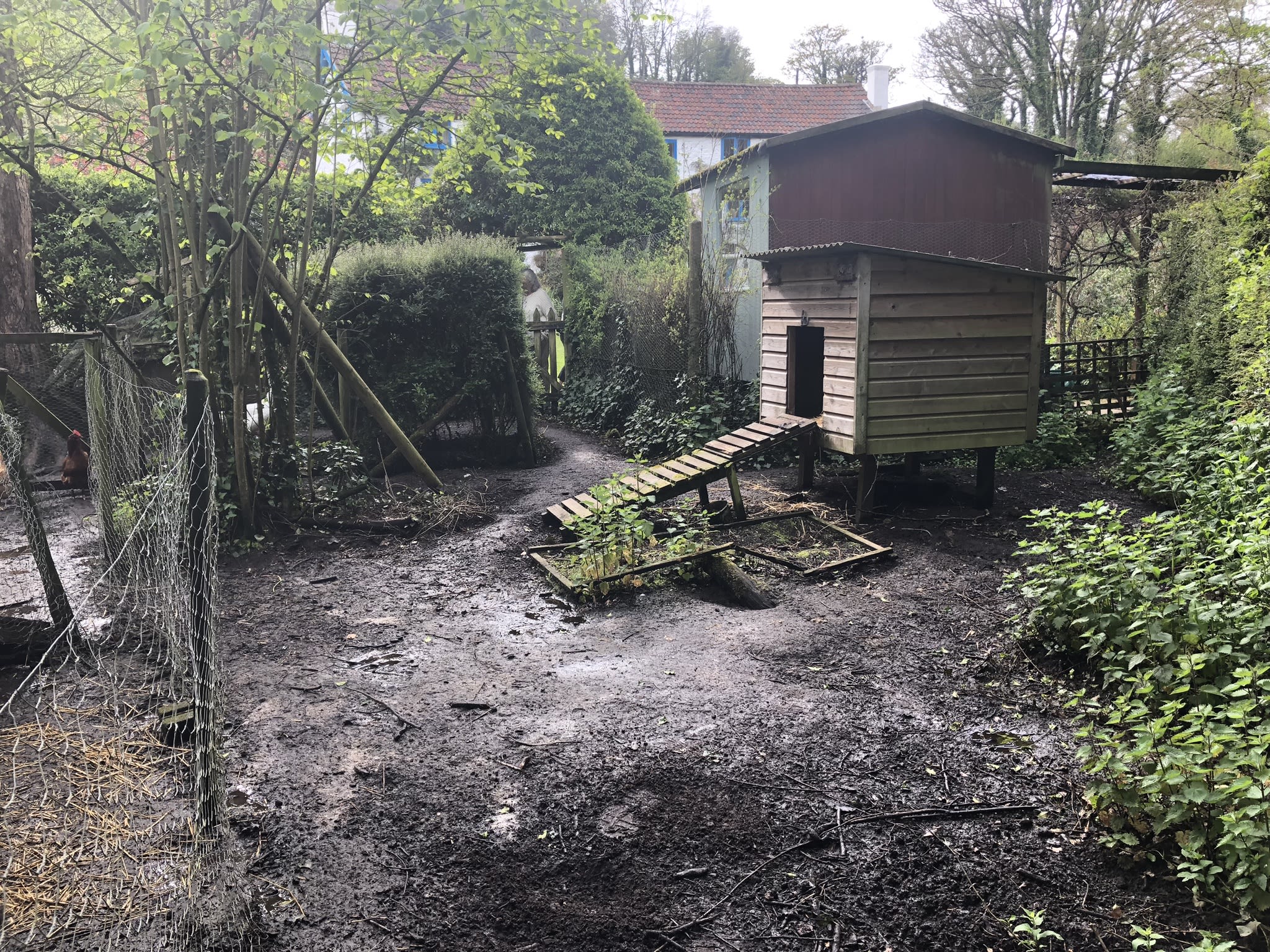
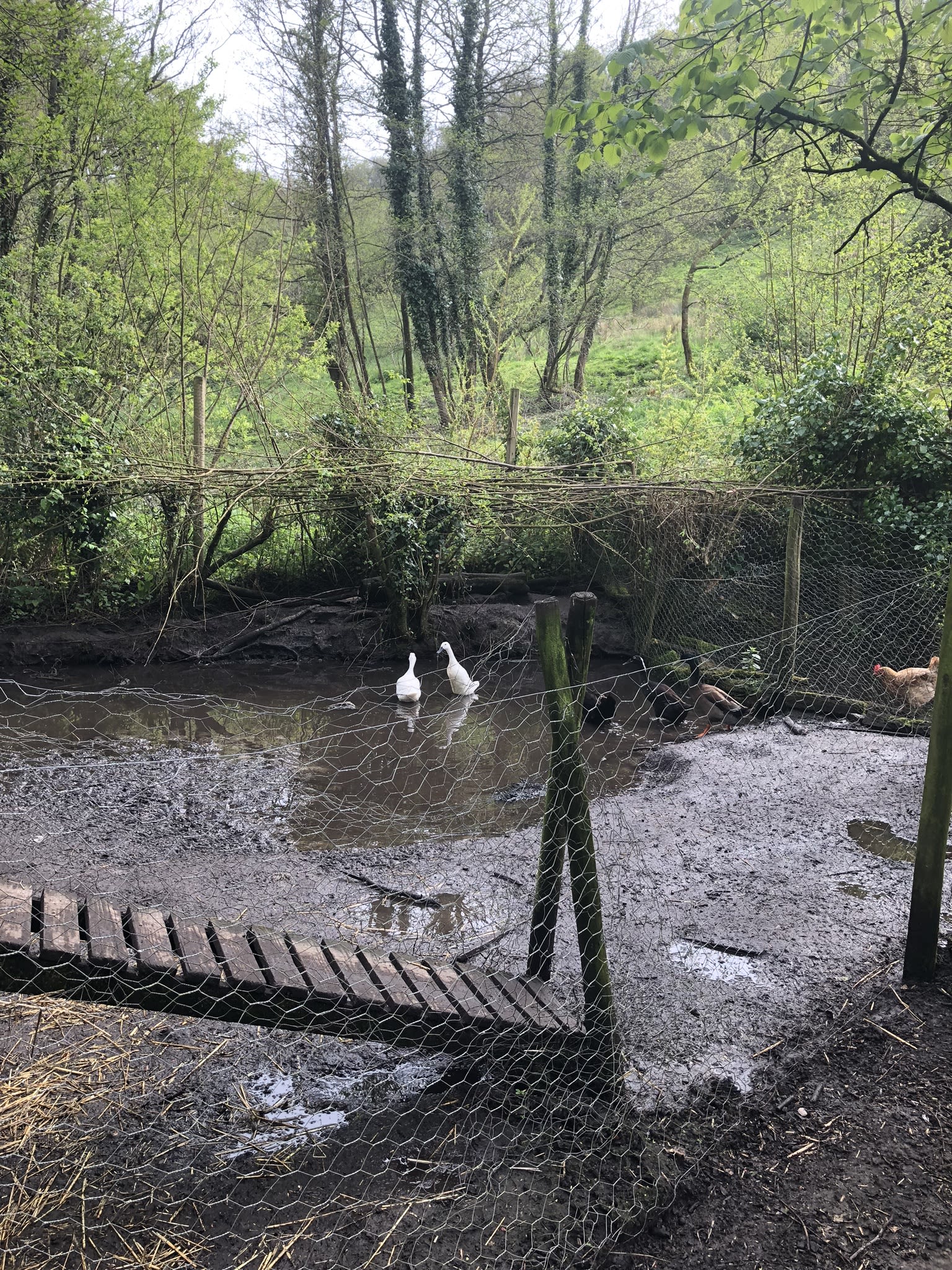
Hole Mill sits at the bottom of a wooded Devon valley, with a stream running through the property and water in the soil year-round. A chlorinated pool didn't suit the site, so we built a natural swimming pond instead: filtered by plants and biology rather than pumps and chemicals.
The design follows the principles set out by David Pagan Butler and the wider European tradition of swimming ponds — a deep, clear swim zone separated from a shallow planted regeneration zone where native marginals handle the filtration. No chlorine, no chemical dosing, no pump noise.
02
Breaking ground
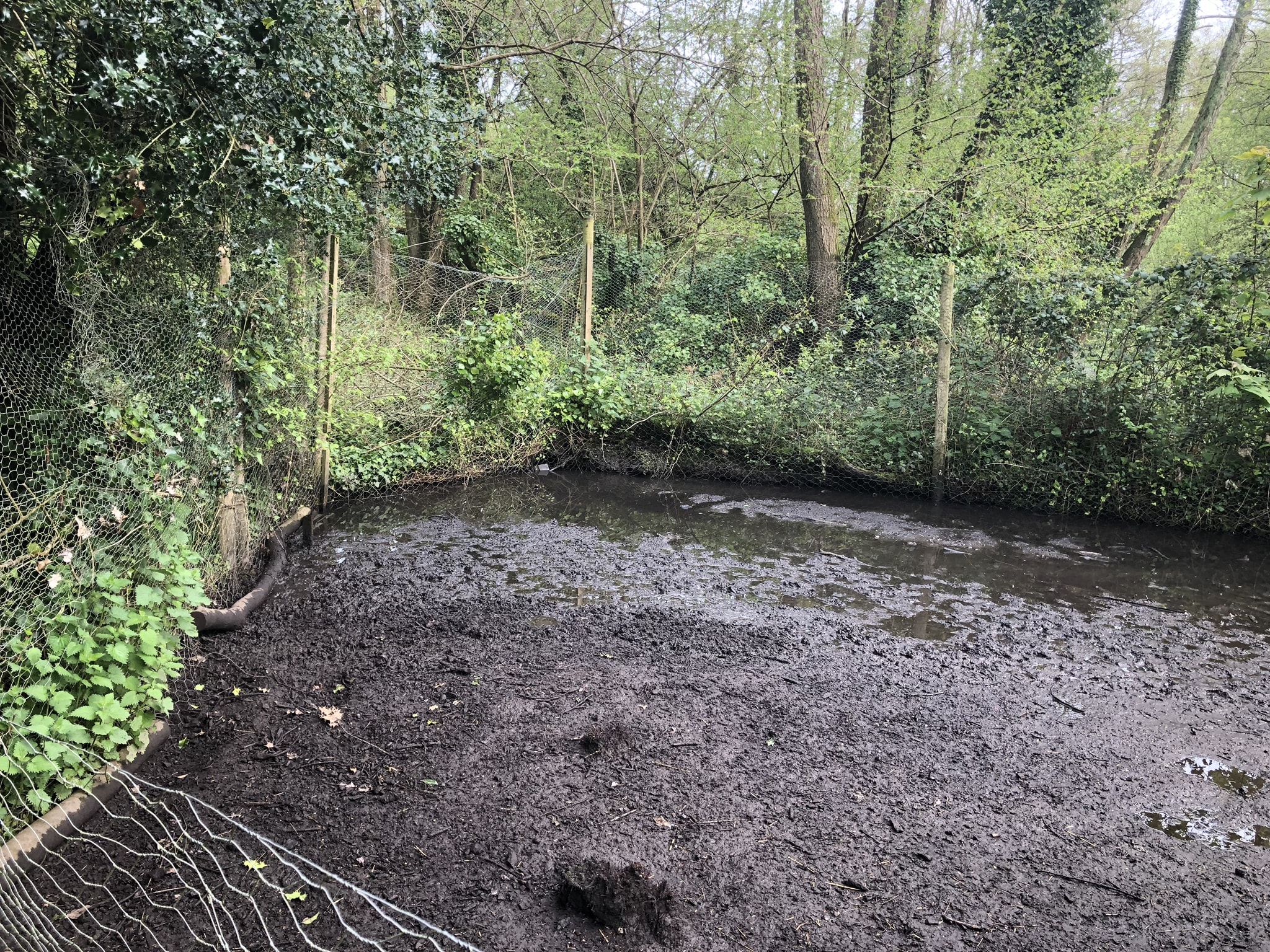
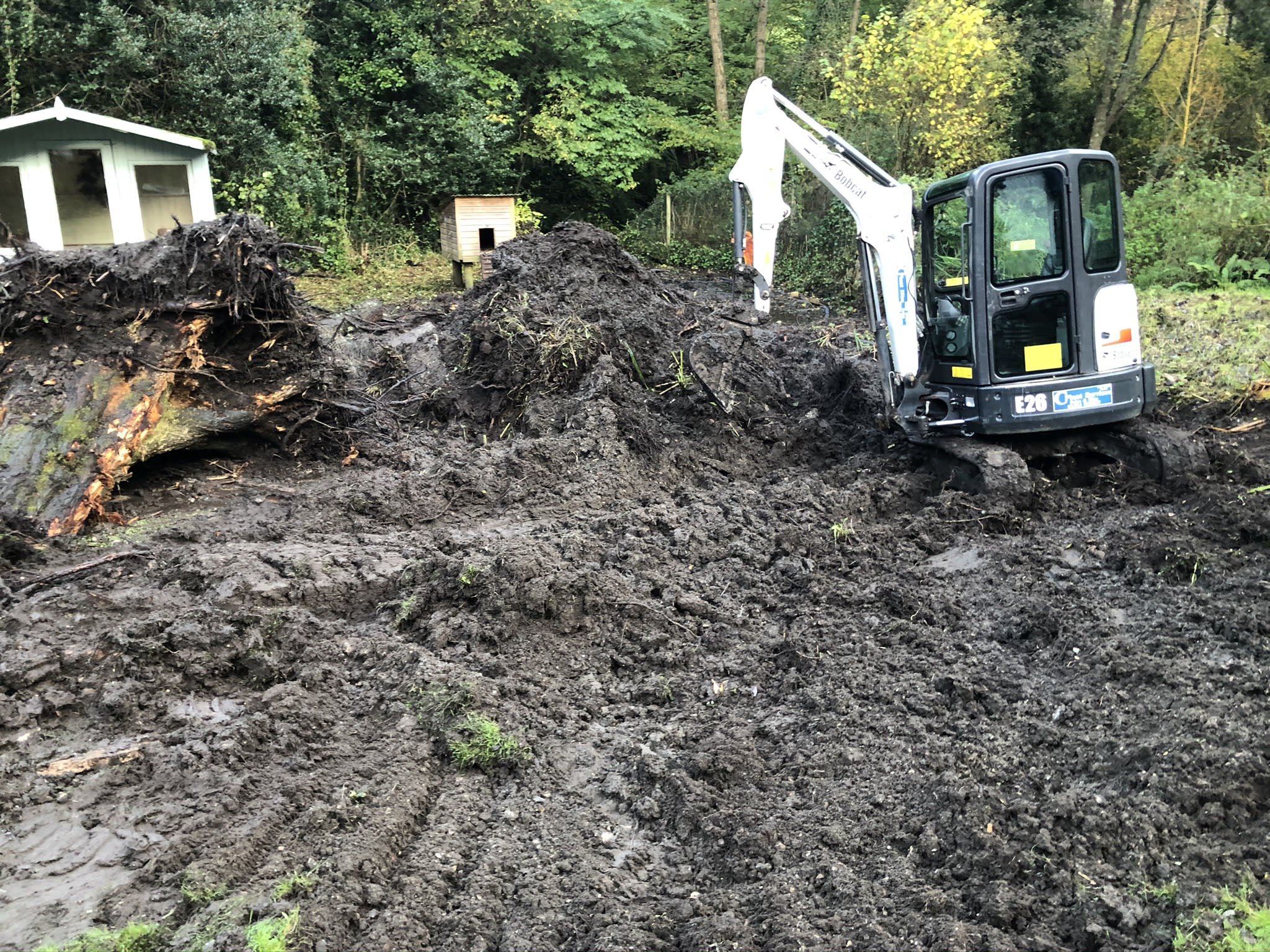
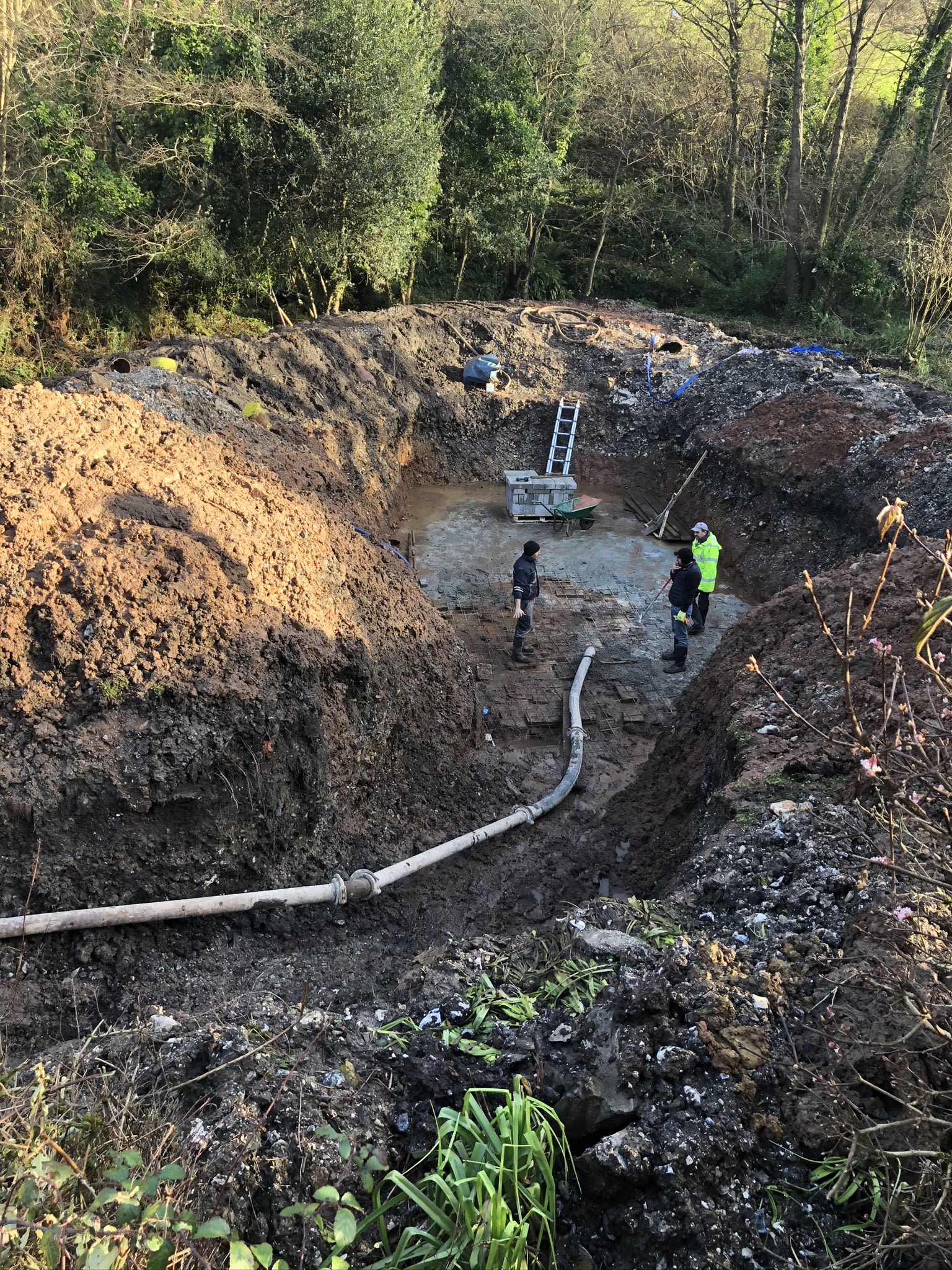
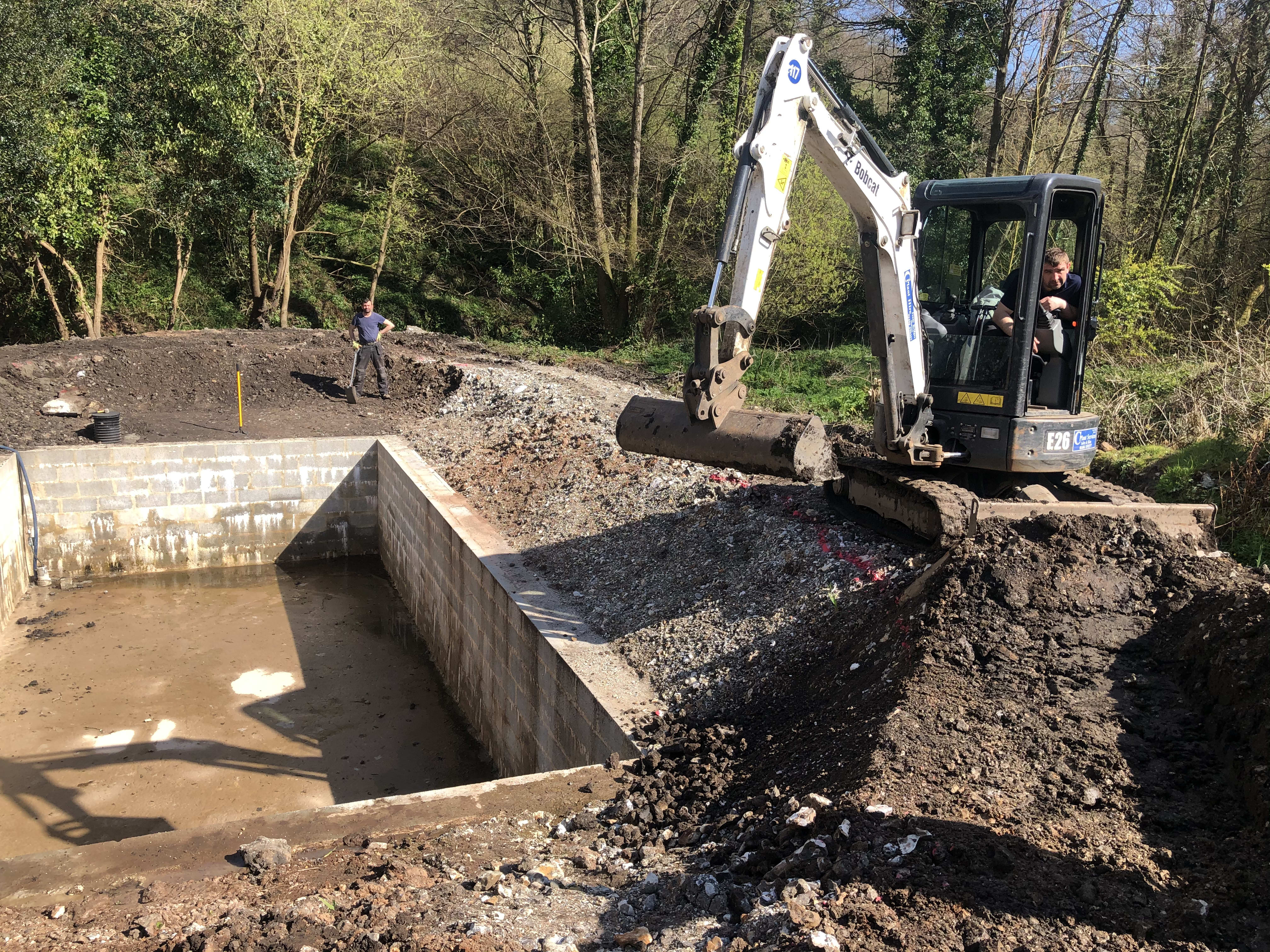
The build started with several weeks of excavation. A digger and dumper were on site full-time, shaping the basin out to its full 3-metre depth in the centre. Spoil was banked around the perimeter and re-used to re-grade the surrounding meadow.
Devon clay is forgiving but heavy. By the end of this phase the basin was clearly defined: a deep central swim zone, gently shelved sides, and a wide shallow shelf on one edge that would become the regeneration zone.
03
Shaping the zones
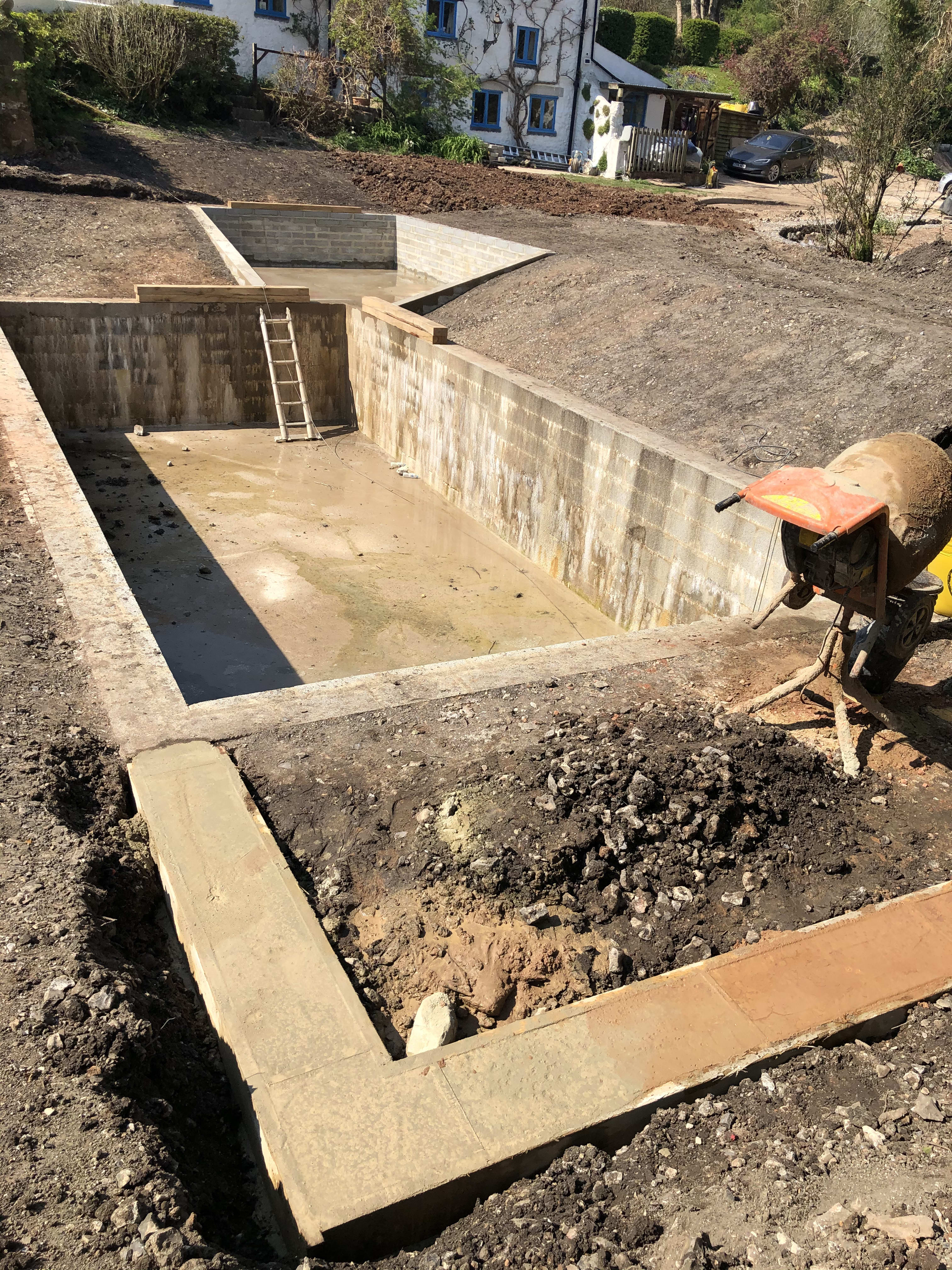
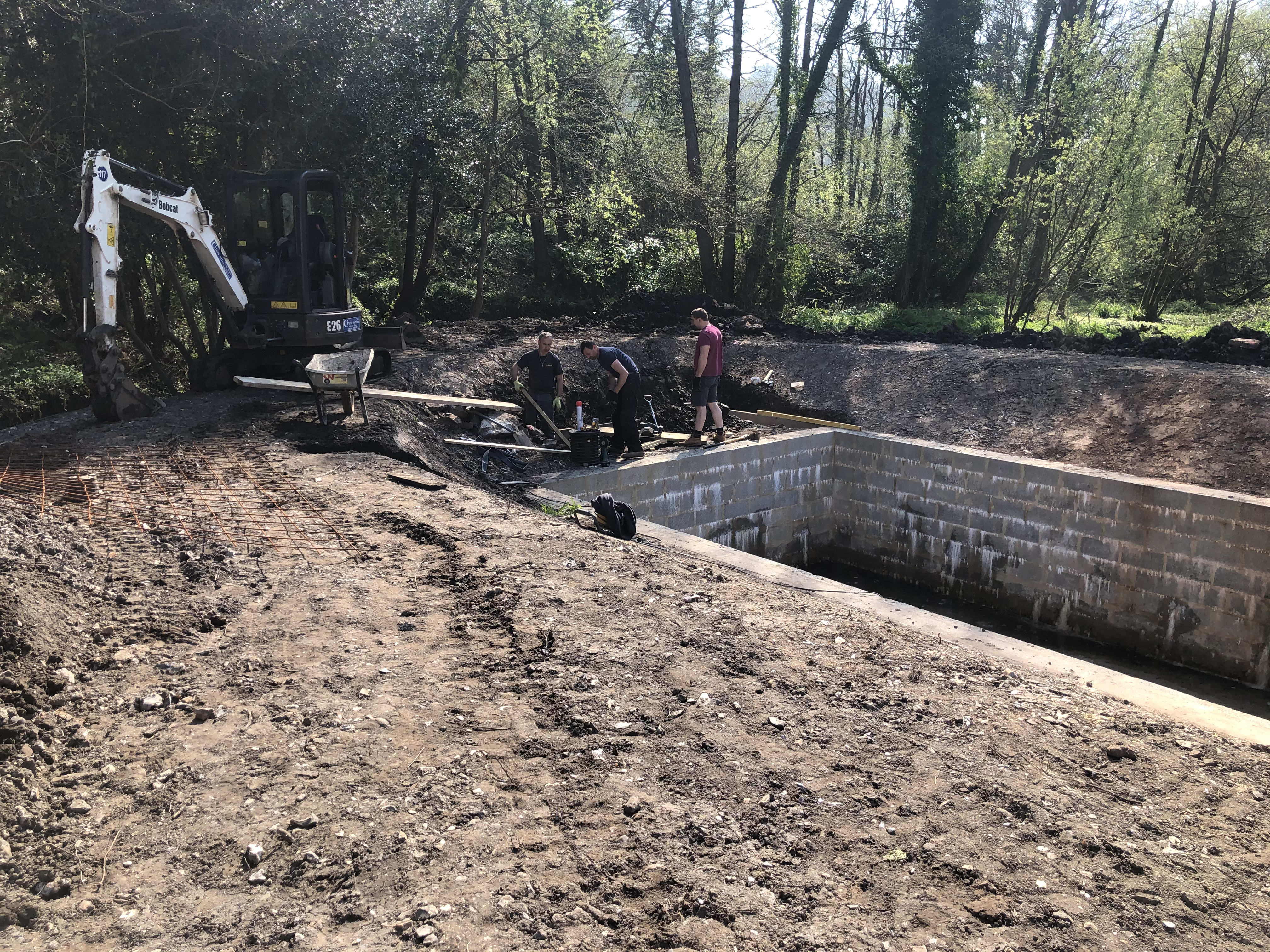
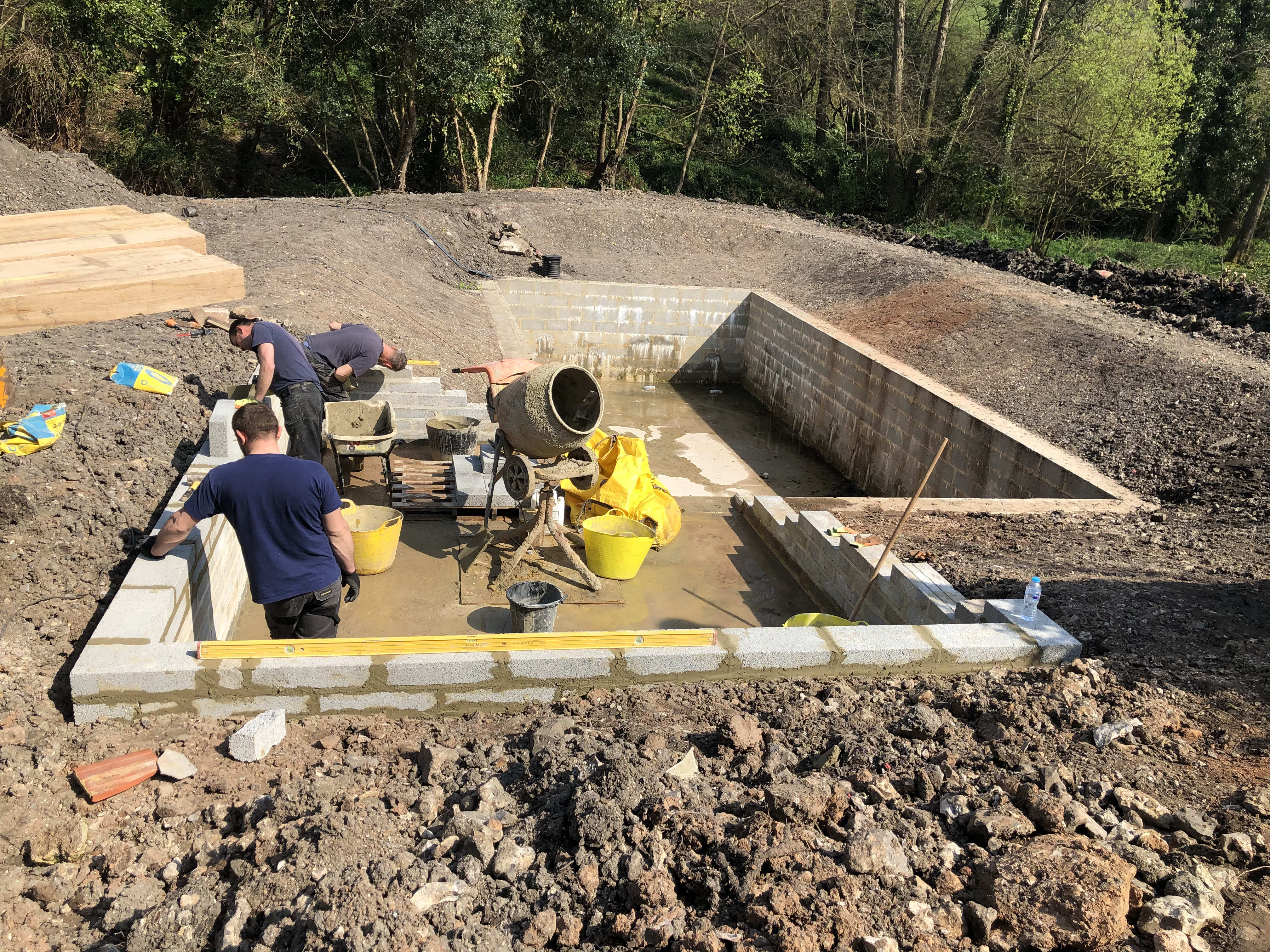
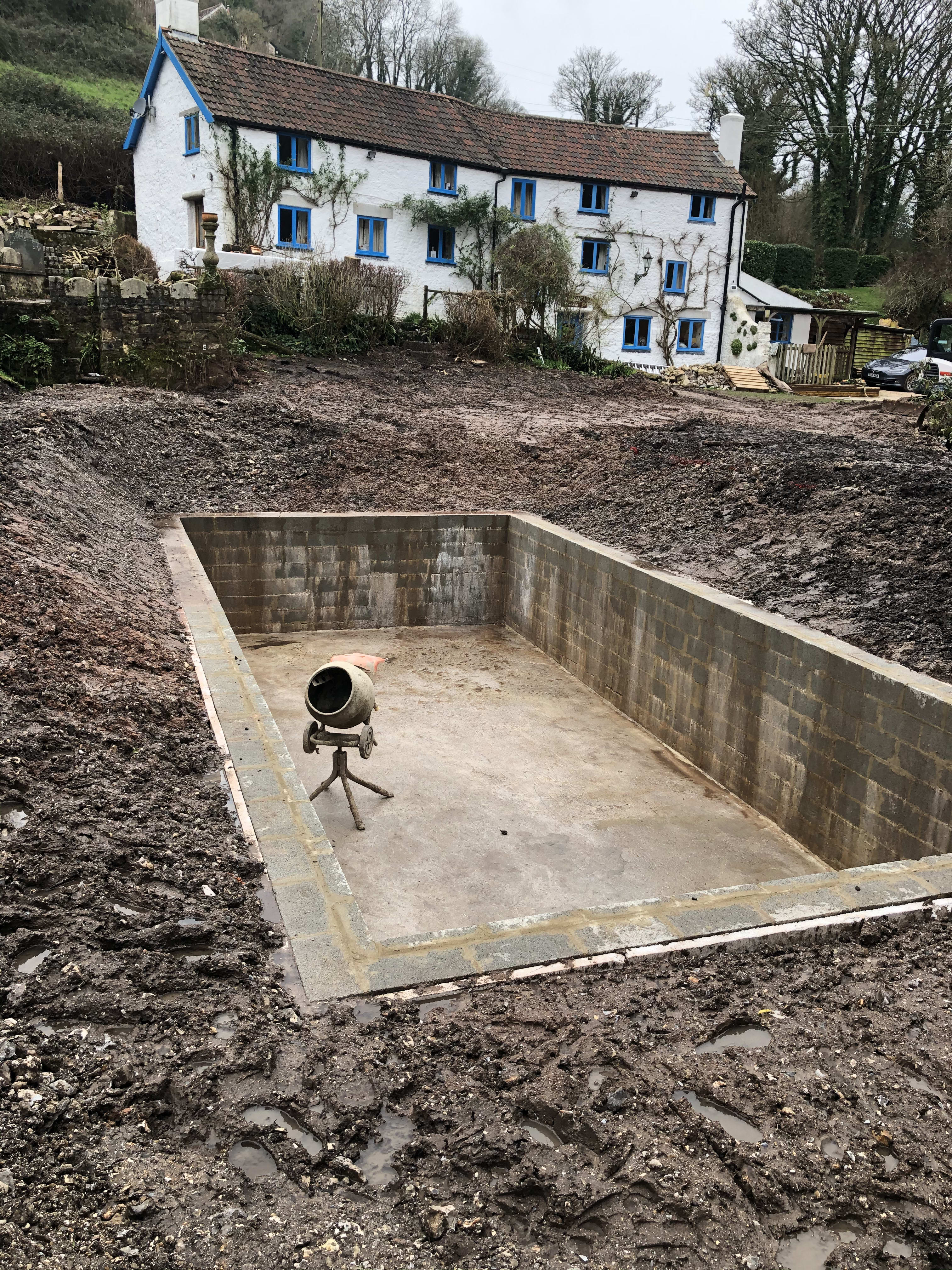
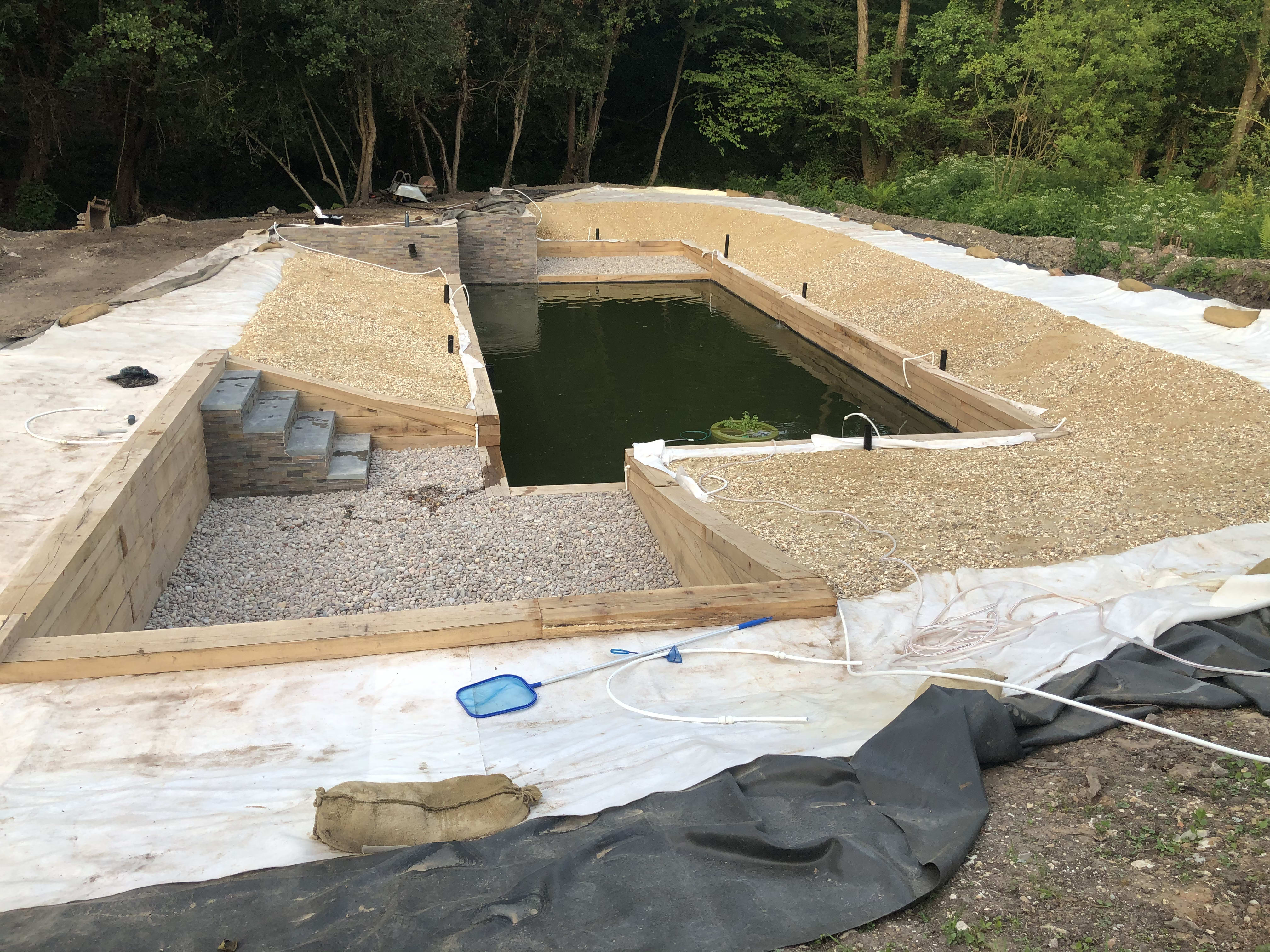
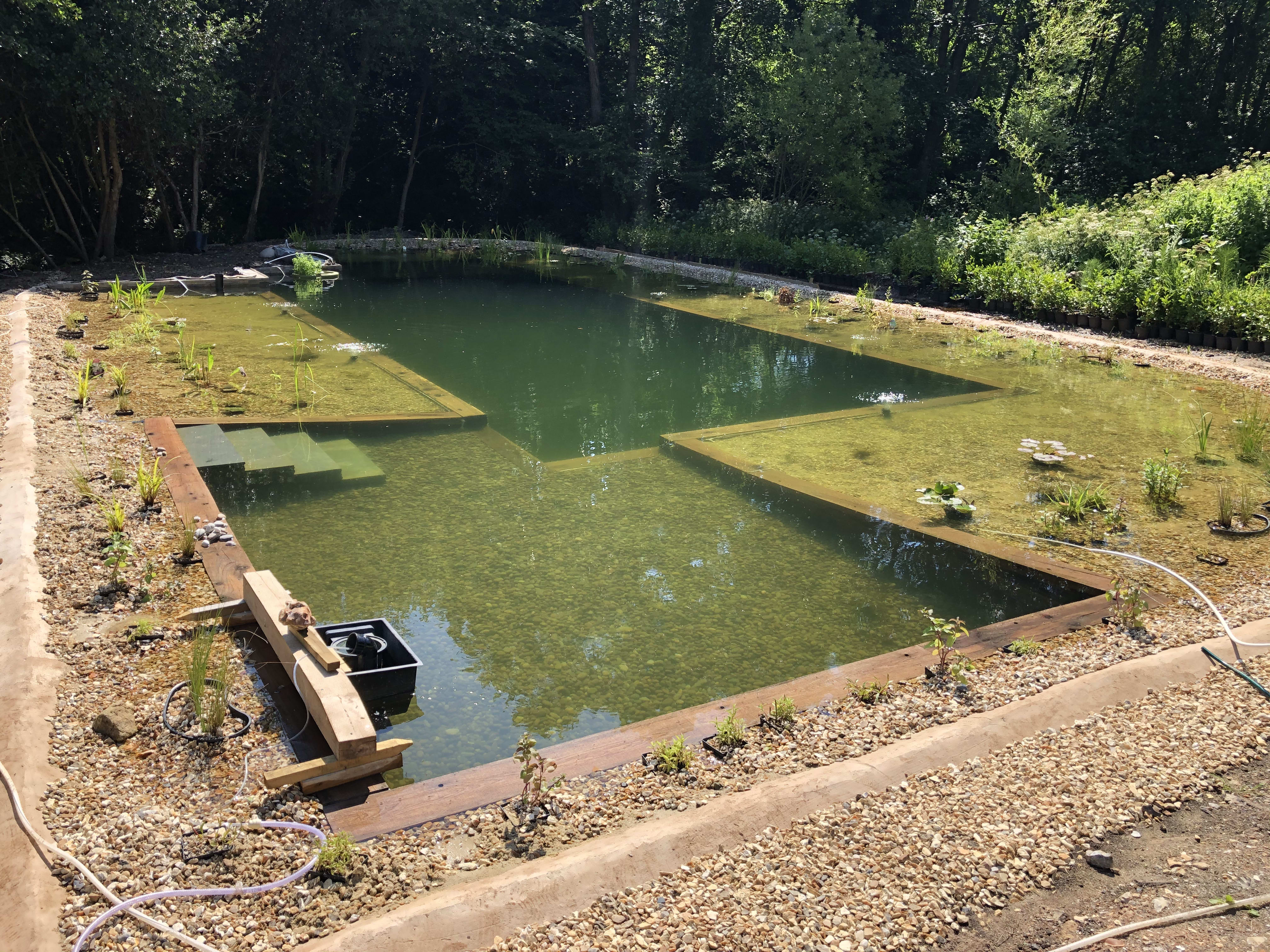
A natural swimming pond is two ponds in one. The deep swimming zone is steep-sided, holds a large volume of cold water, and is kept free of plants. The regeneration zone is shallow — never deeper than about 50 cm — and densely planted. Water moves slowly between the two so plant roots can strip out the nutrients that would otherwise feed algae.
Slopes were refined, the regeneration shelf was levelled to within a few centimetres, and a gentle ramp was built in on one side so wildlife can come and go freely.
04
Lining the pond
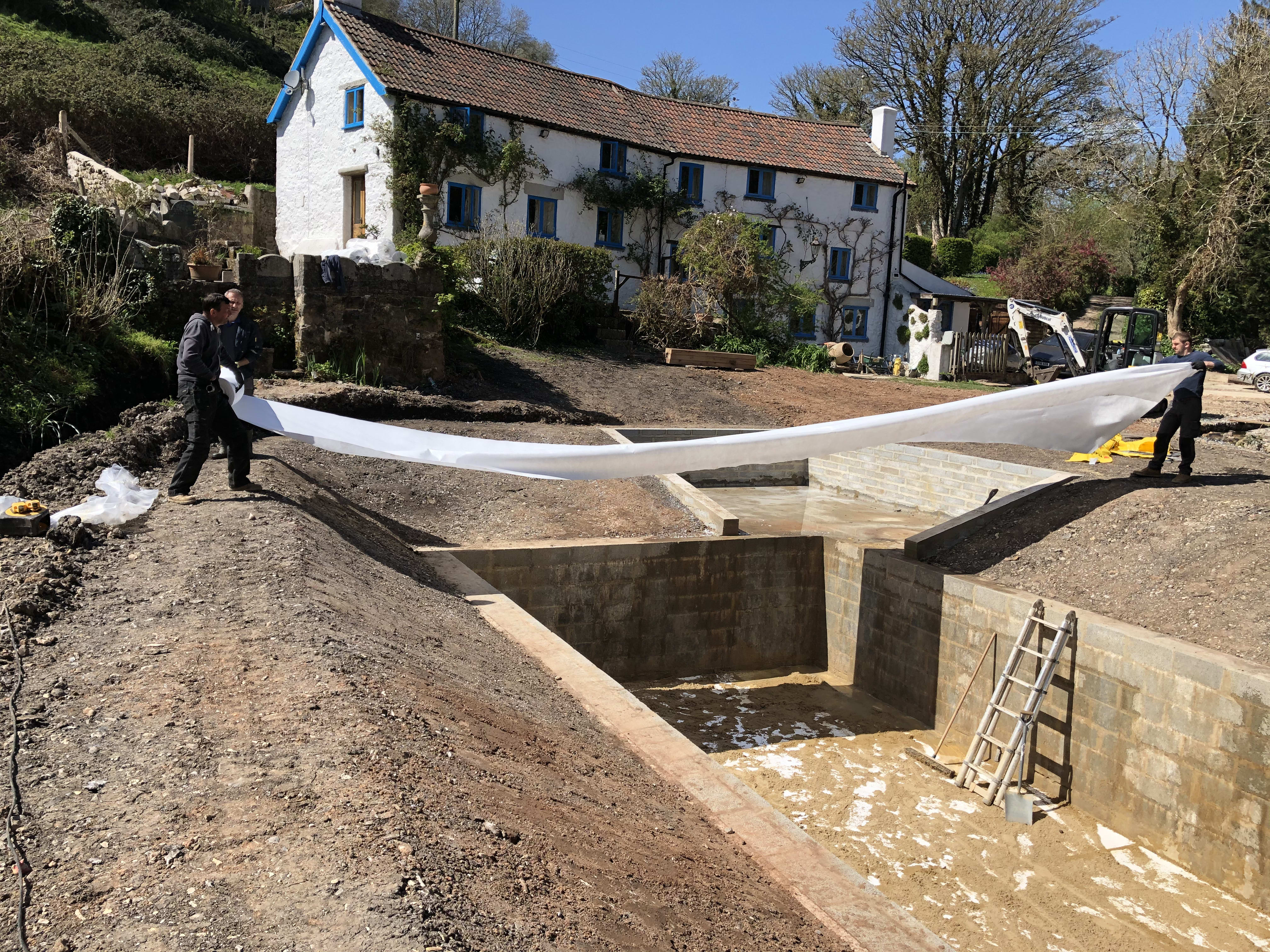
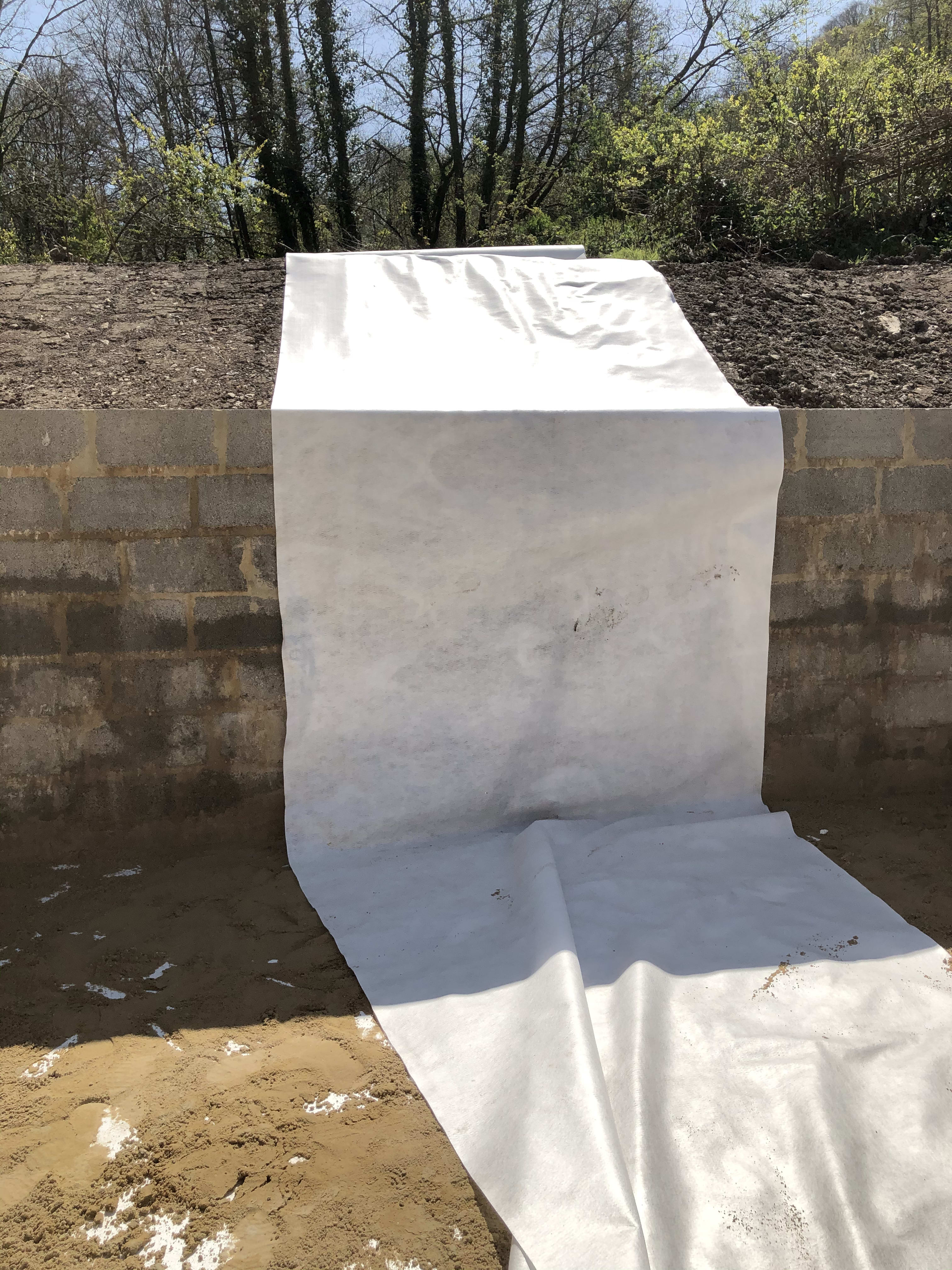
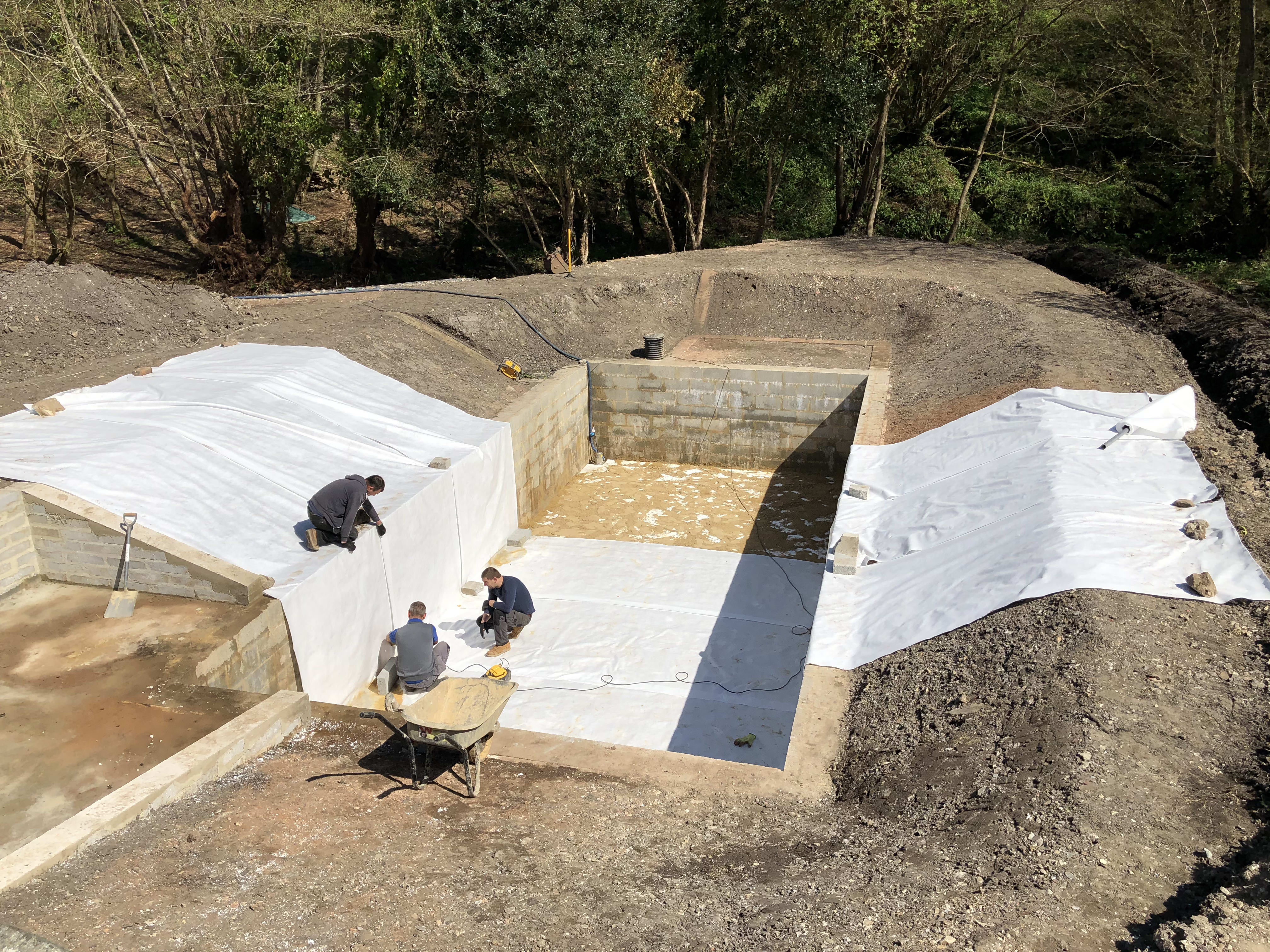
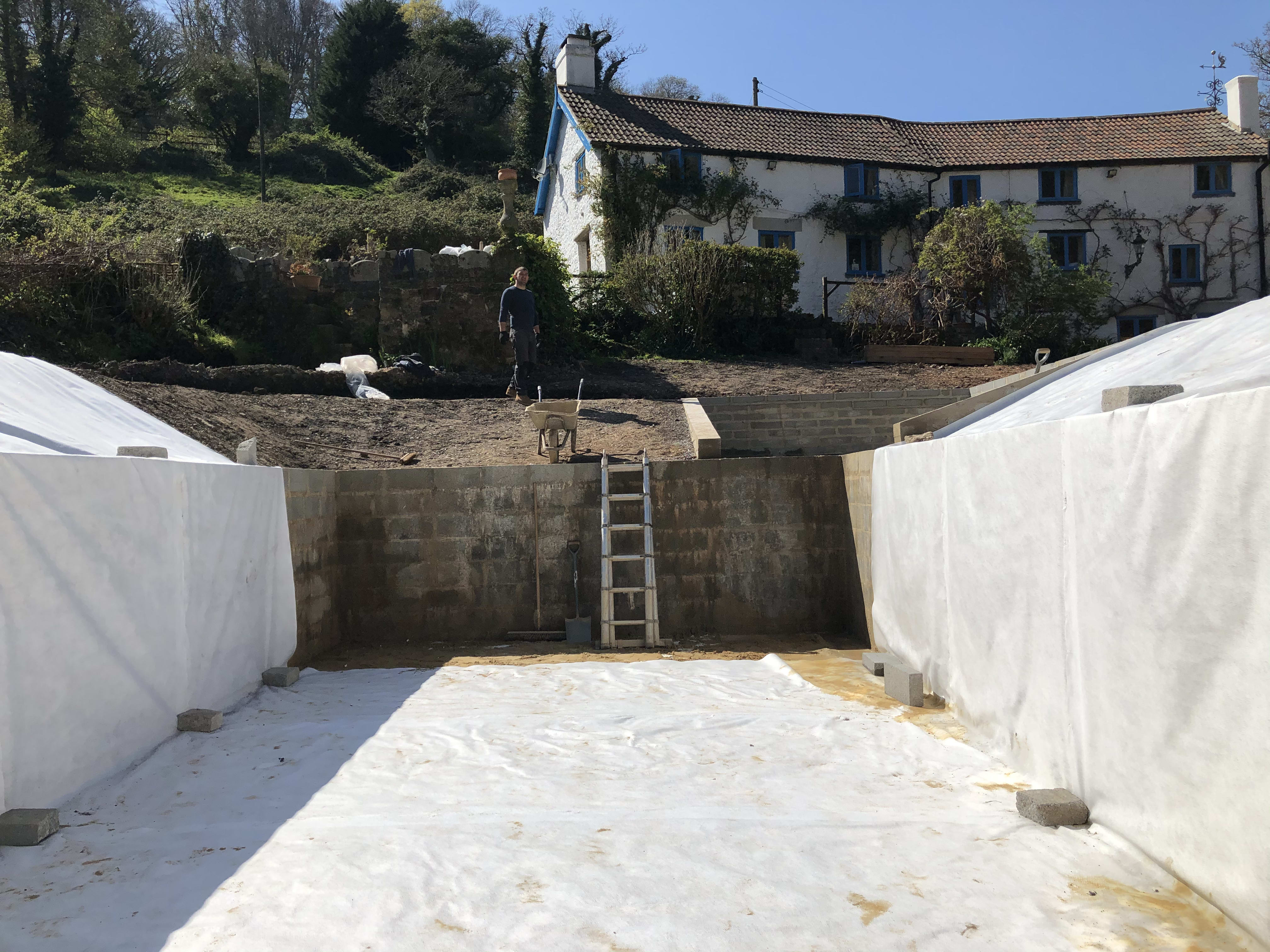
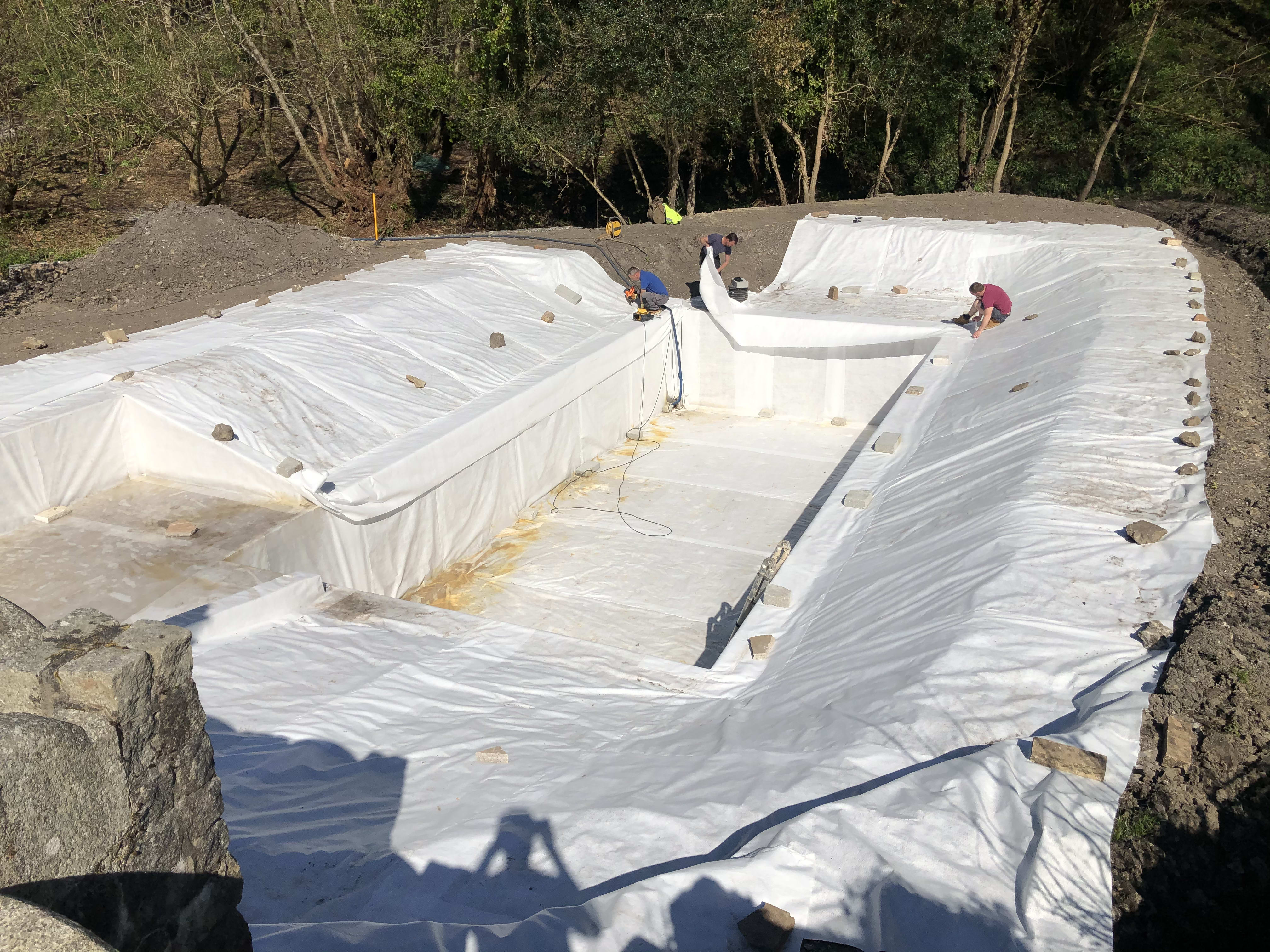
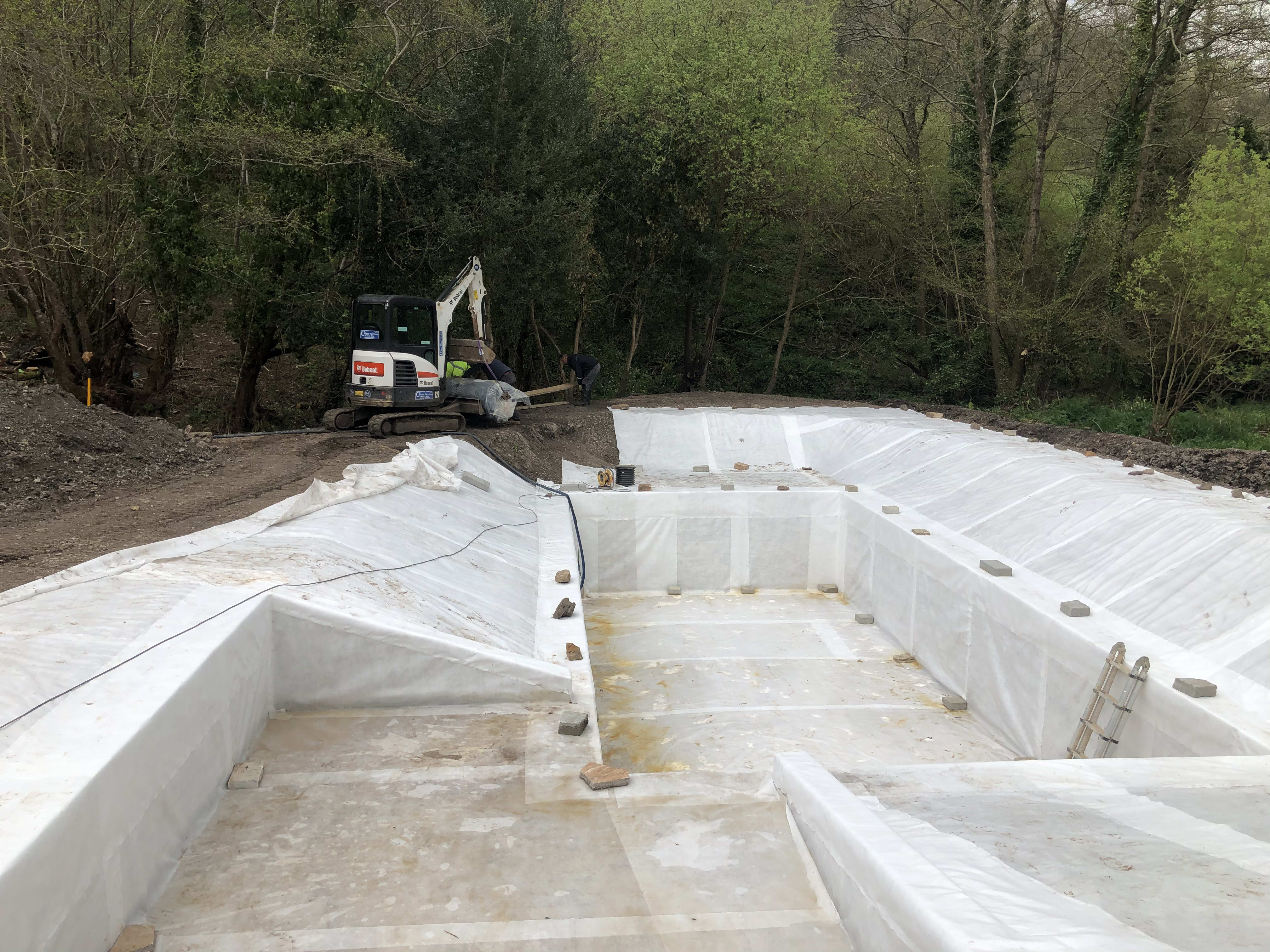
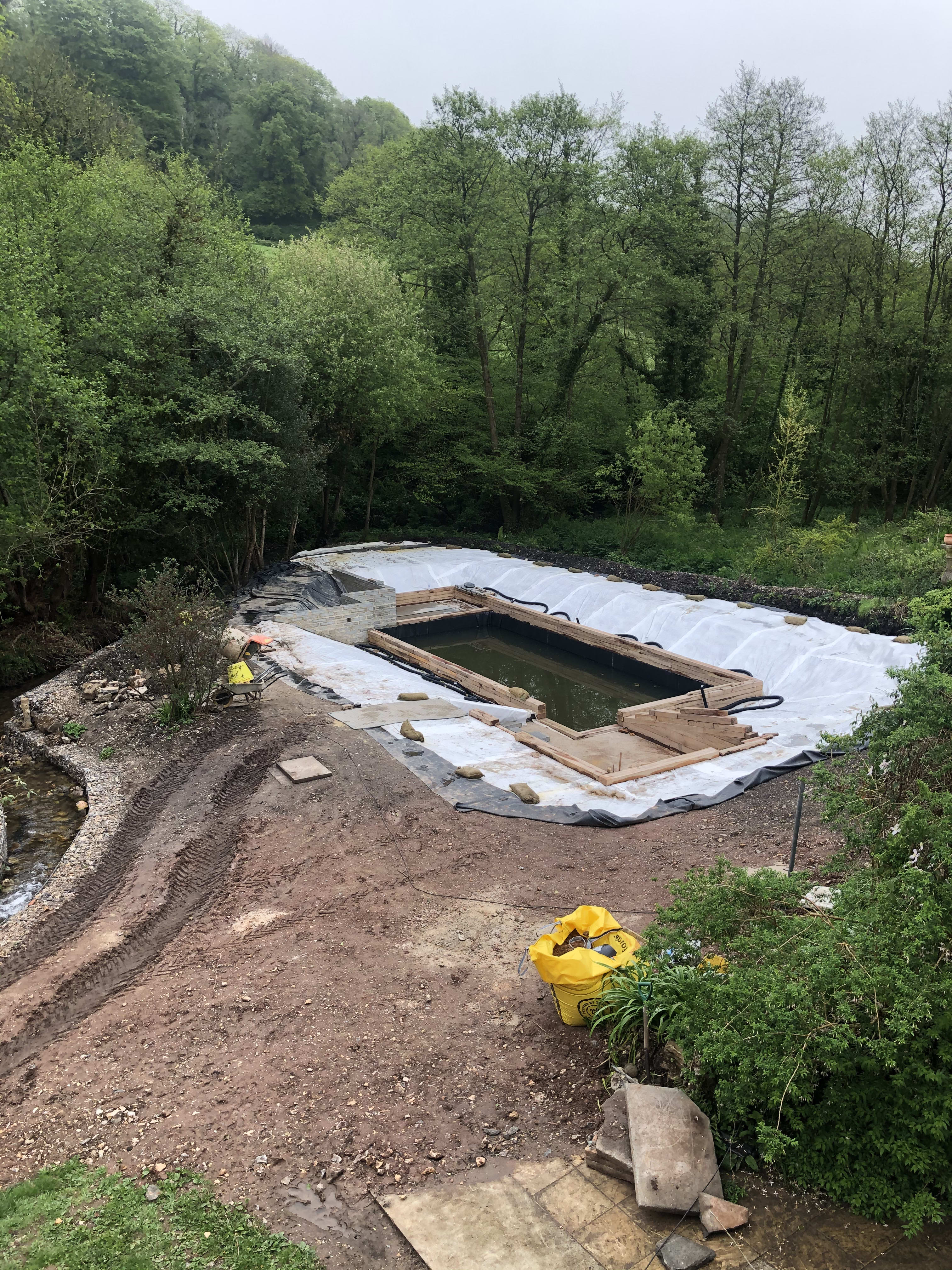
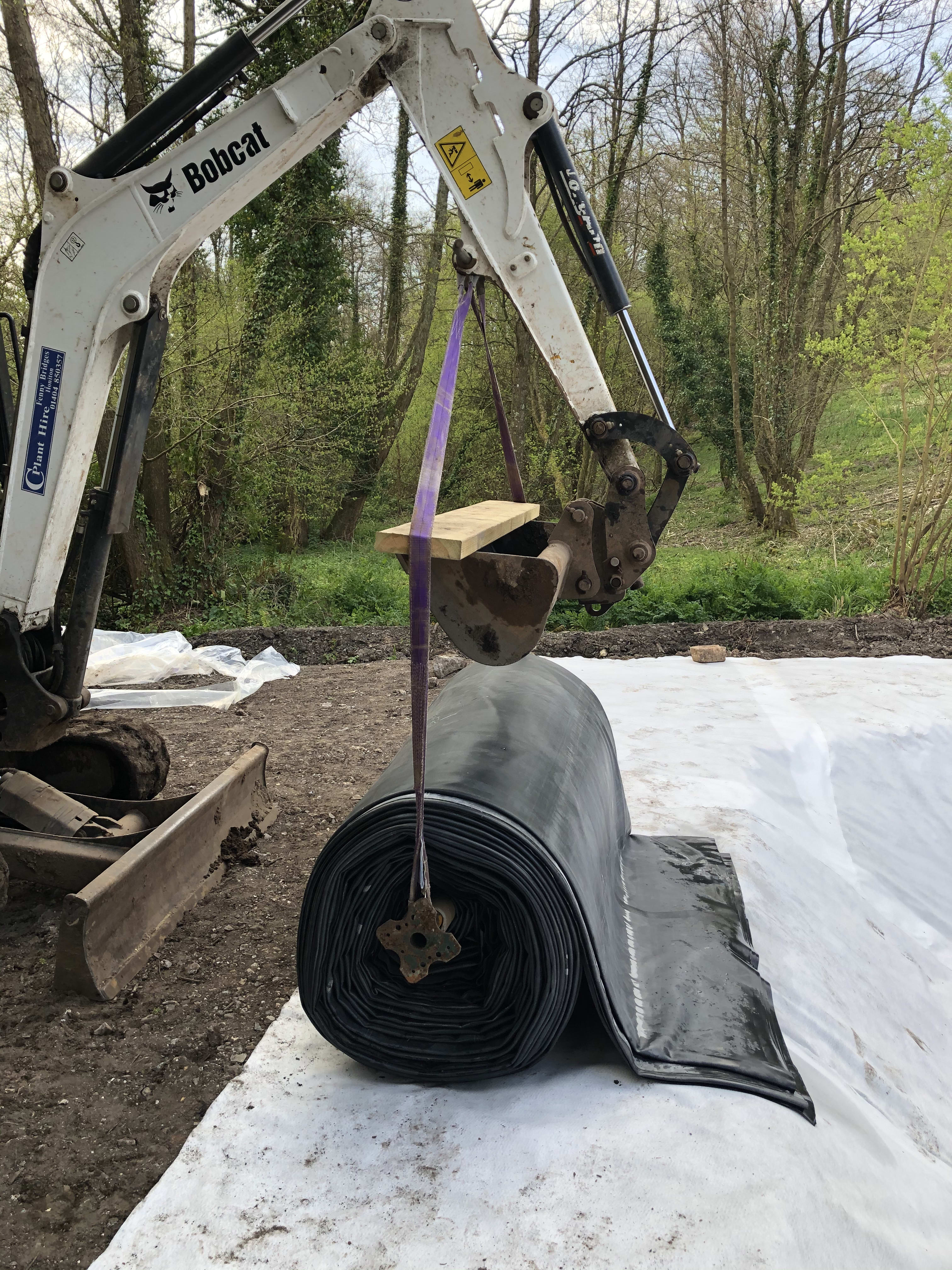
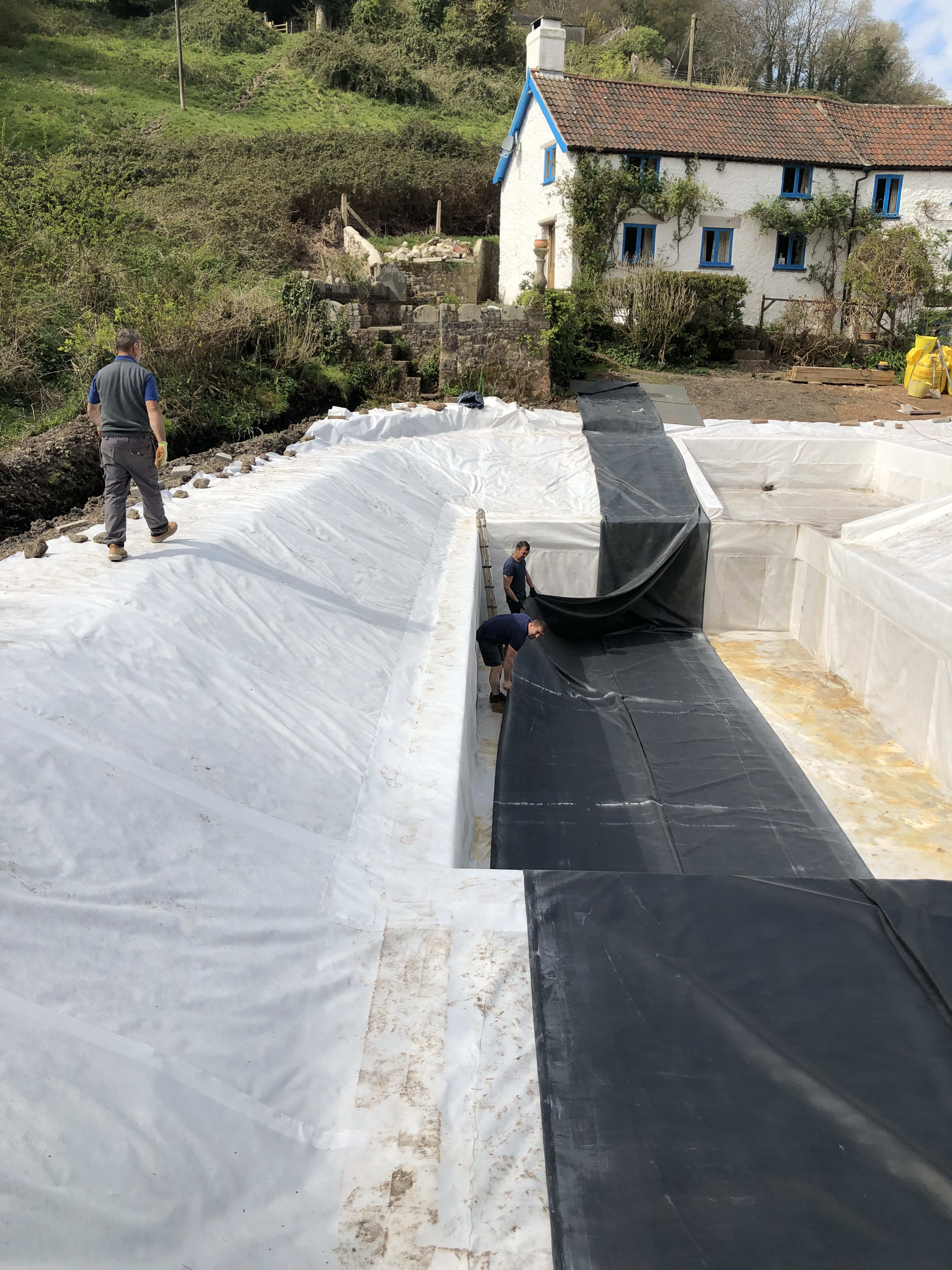
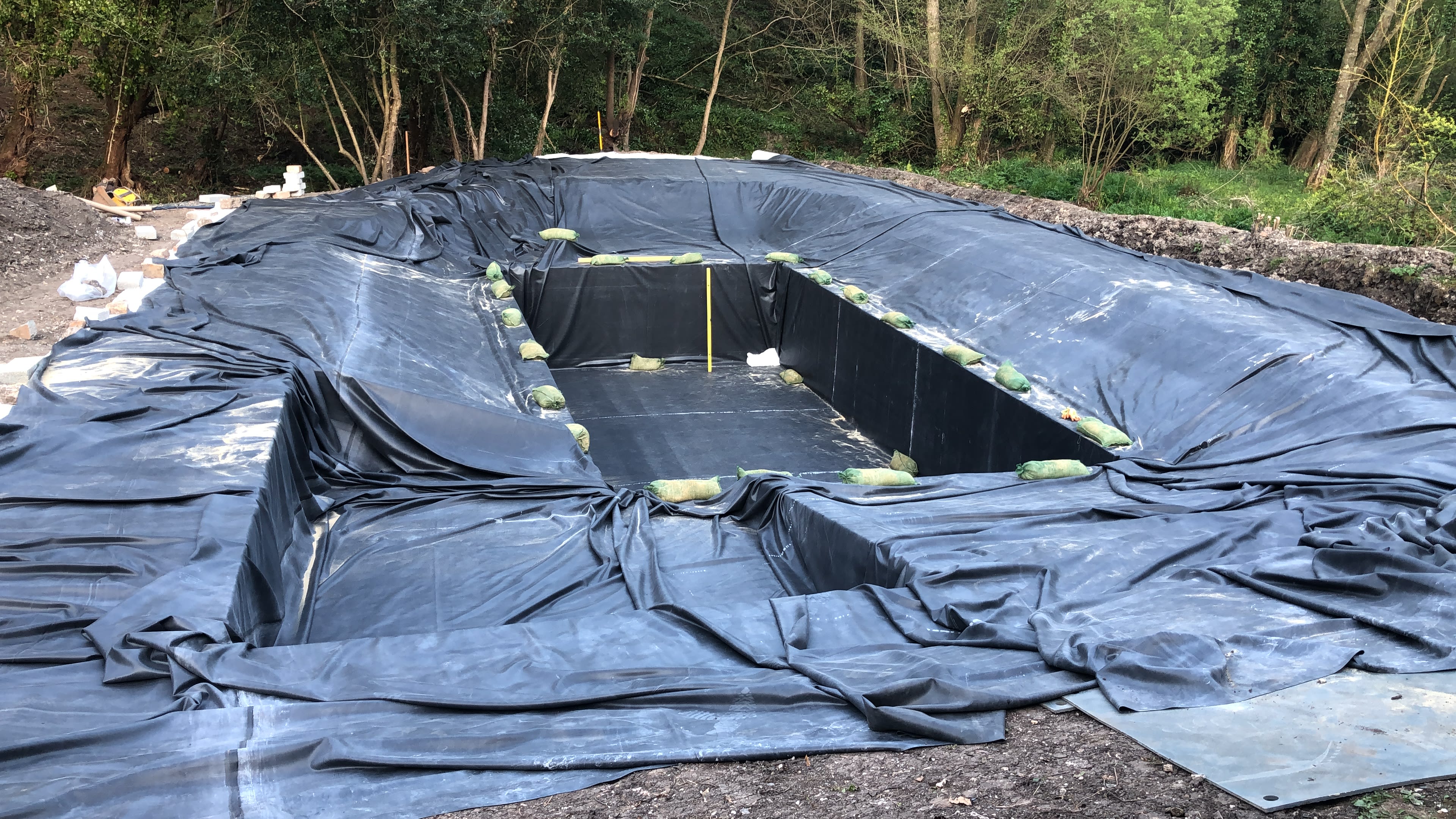
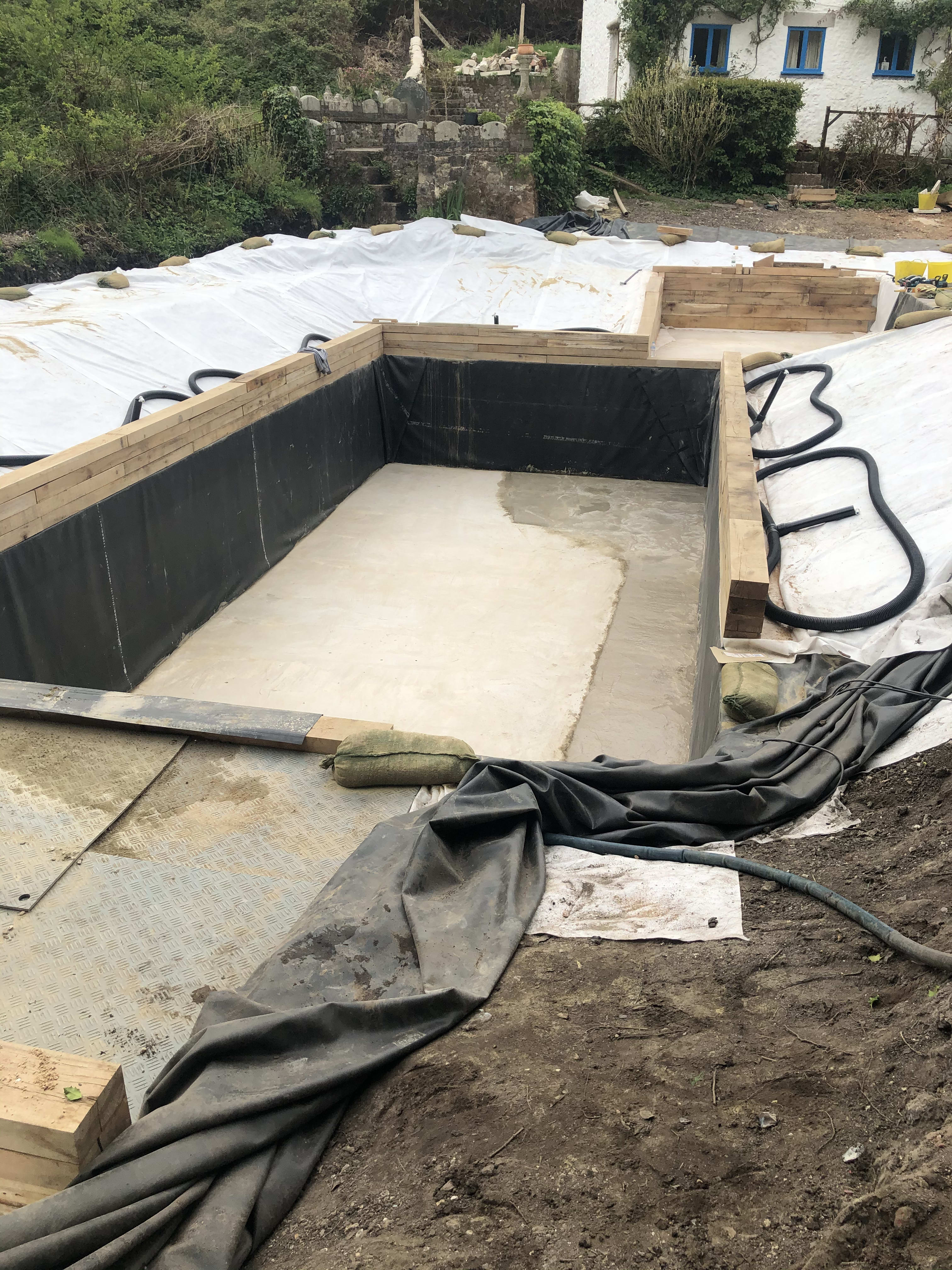
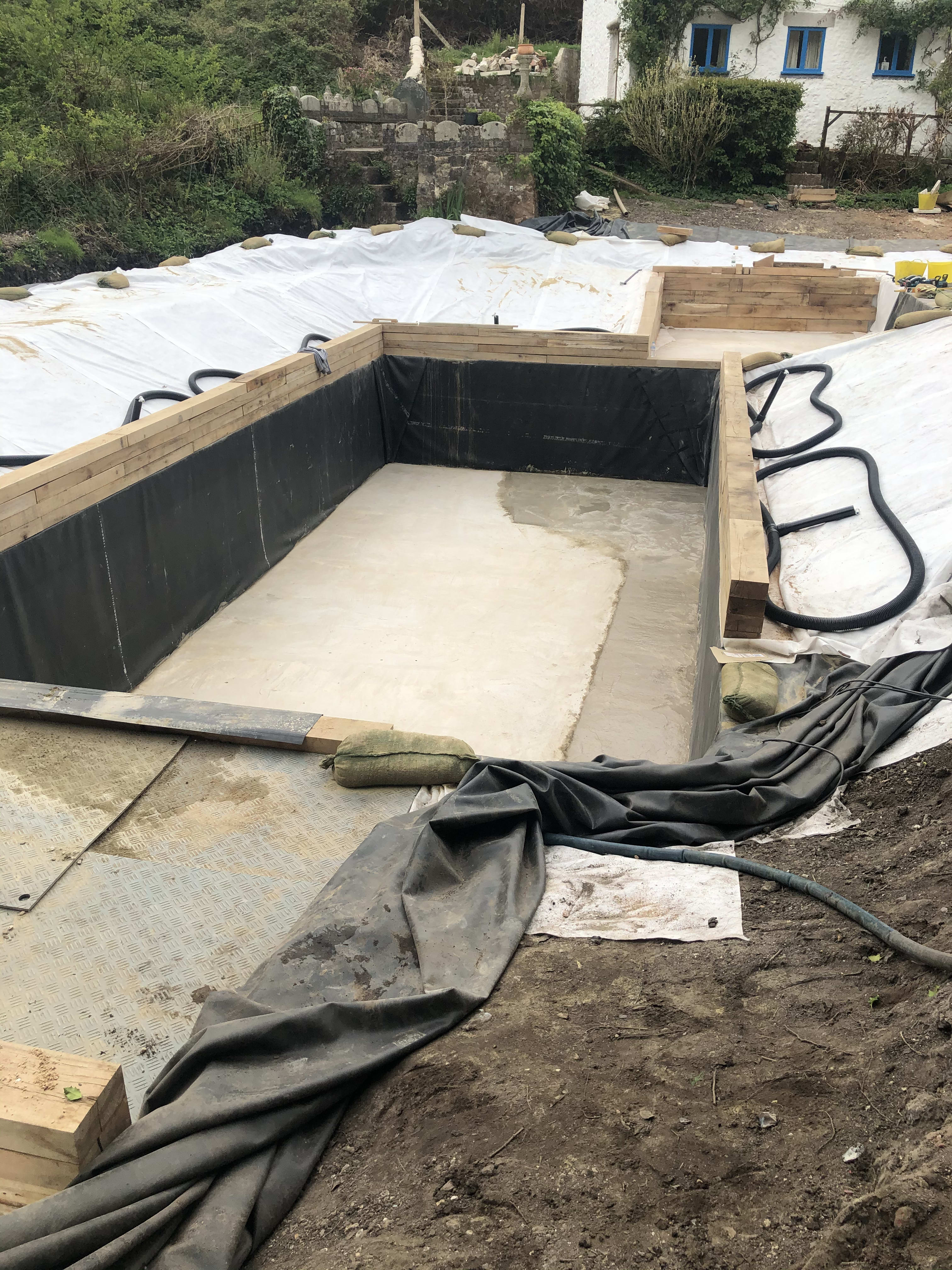
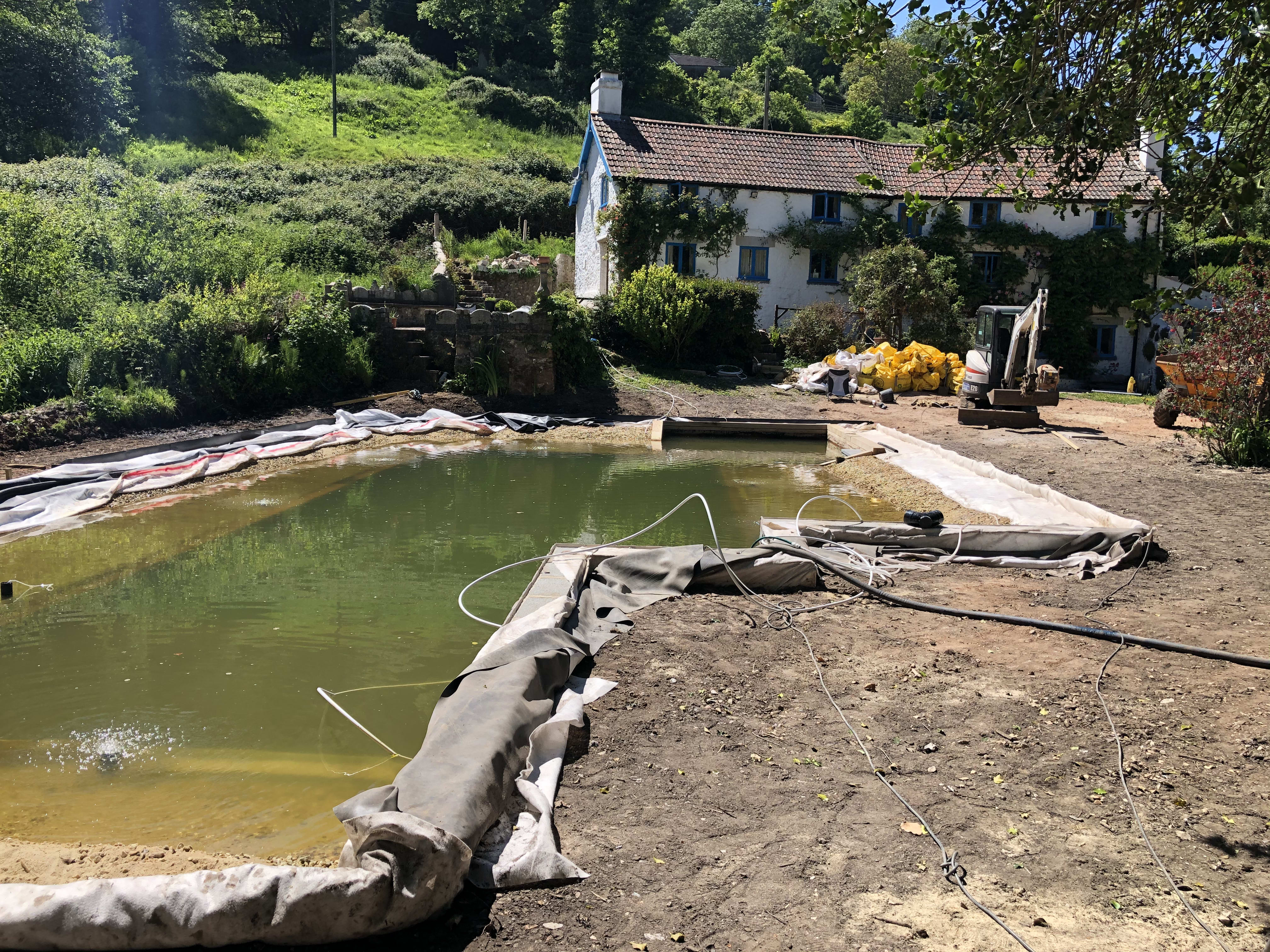
In month four the liner went in. First a thick protective fleece across the entire footprint, smoothed flat. Then a single sheet of EPDM rubber, laid into the basin and worked into the contours by hand.
EPDM is the standard choice for a pond this size: long life, fish- and wildlife-safe, and stable across UK temperature swings. The edges were tucked under the surrounding stone and earth so the liner isn't visible at the waterline.
05
Filling and planting
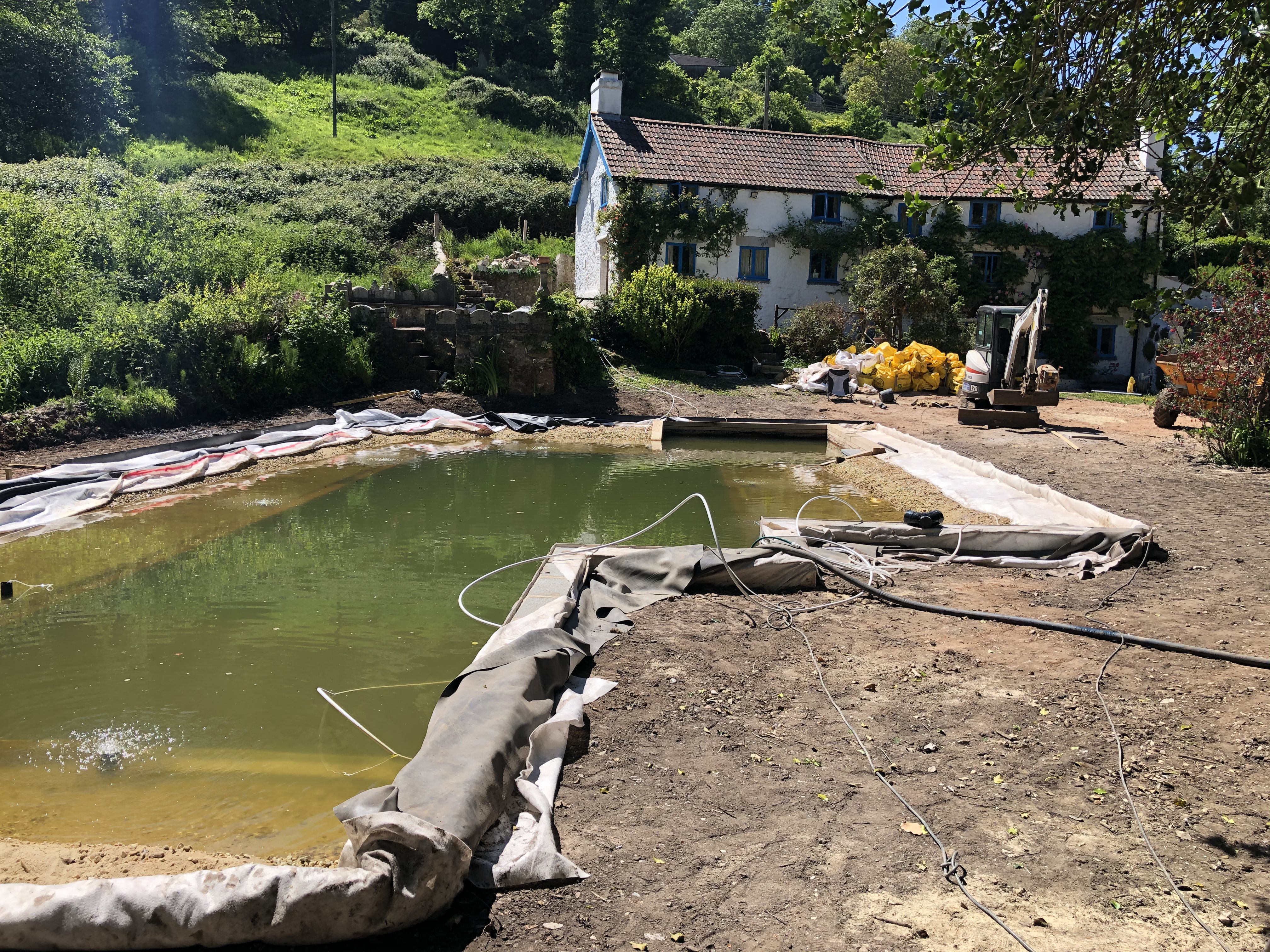
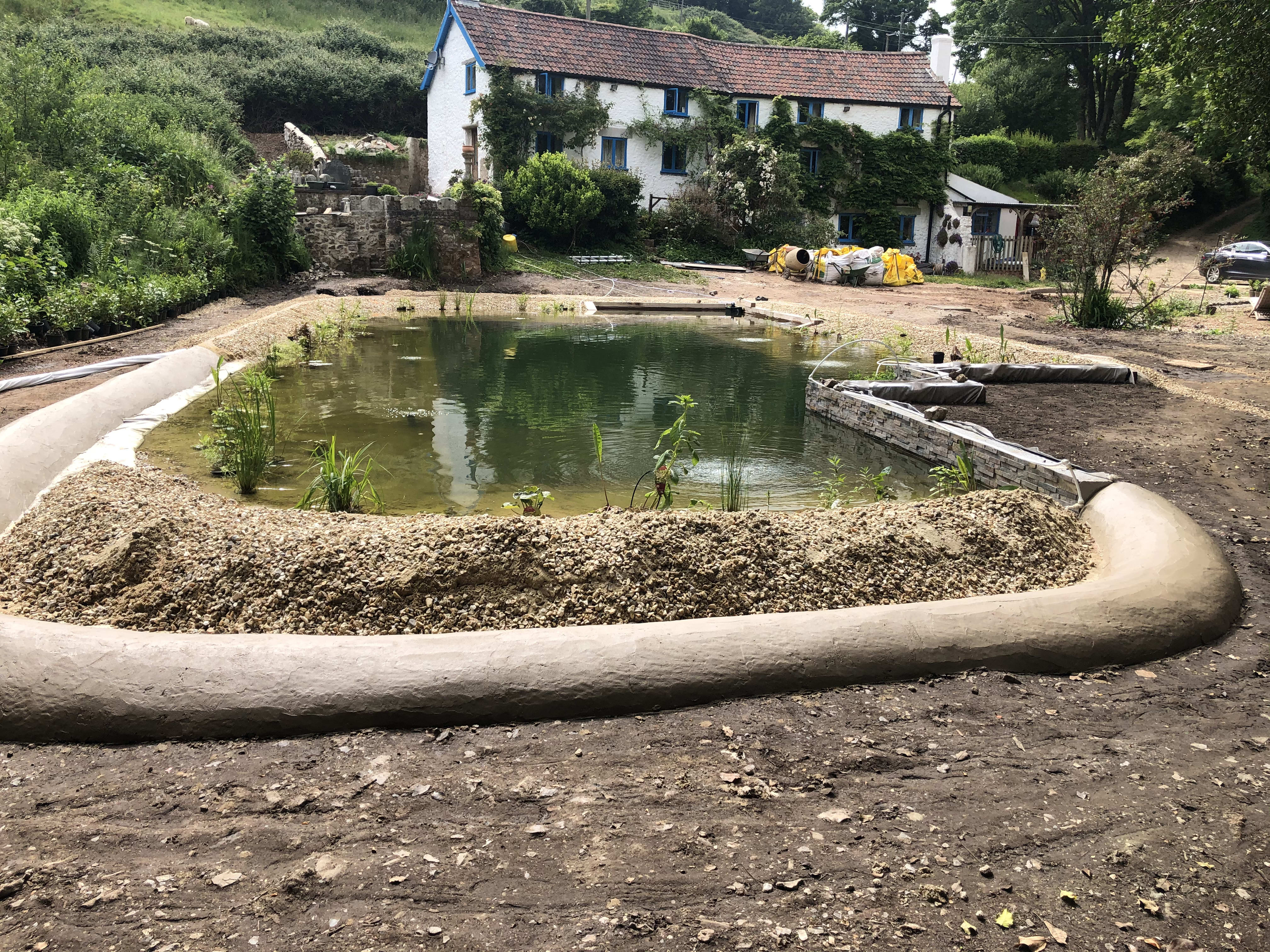
First fill took several days. As the water level climbed, the regeneration shelf was planted: yellow flag iris, water mint, soft rush, water plantain, marsh marigold and hardy native waterlilies. Every plant pulls nutrients from the water as it grows. Collectively they are the pond's filter.
We also seeded the microbiome with a couple of buckets of clear water and substrate from a mature, healthy pond. Within a few weeks the system began to balance: the water cleared, went through the normal early-season algal bloom that the plants out-compete, then settled.
06
The jetty and steps
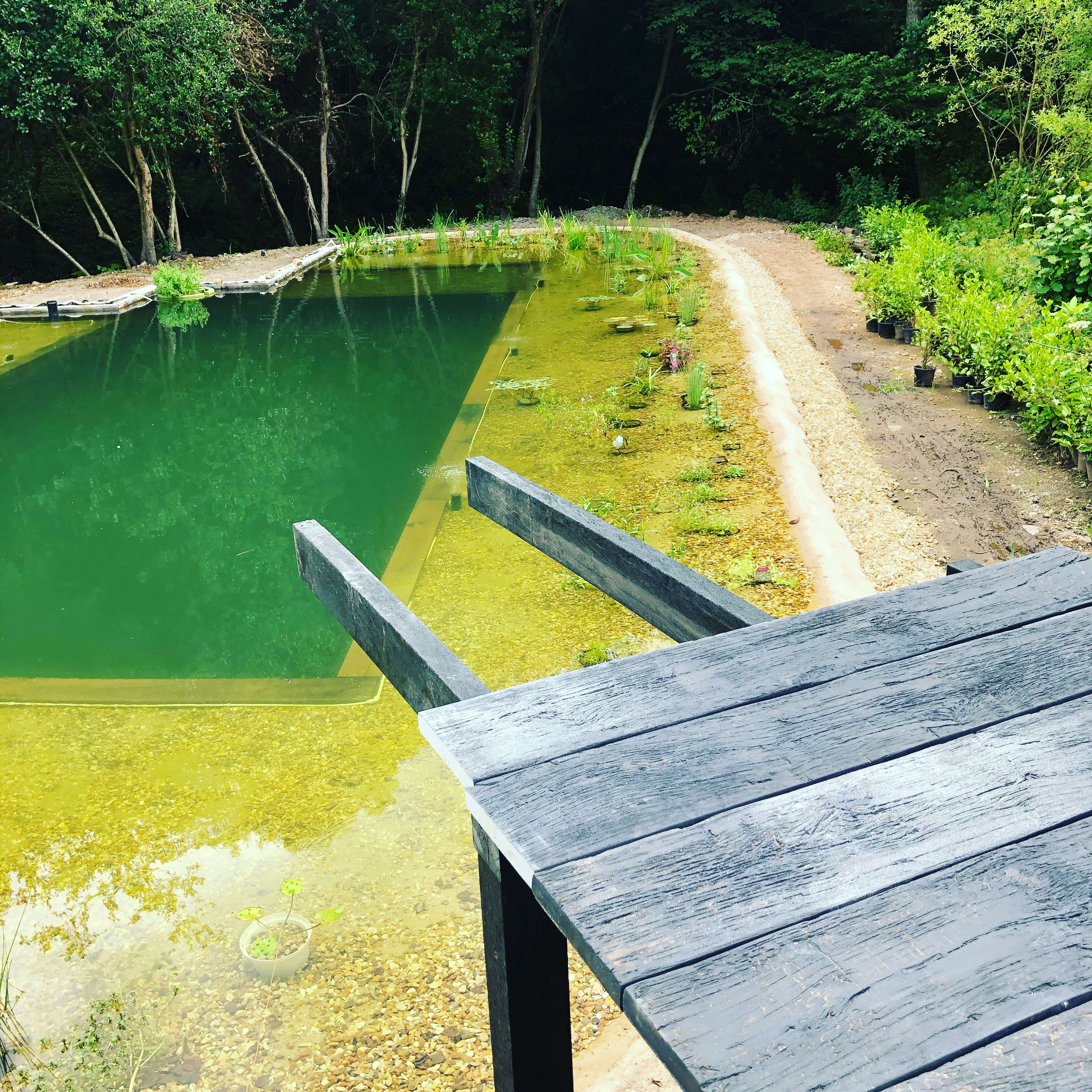
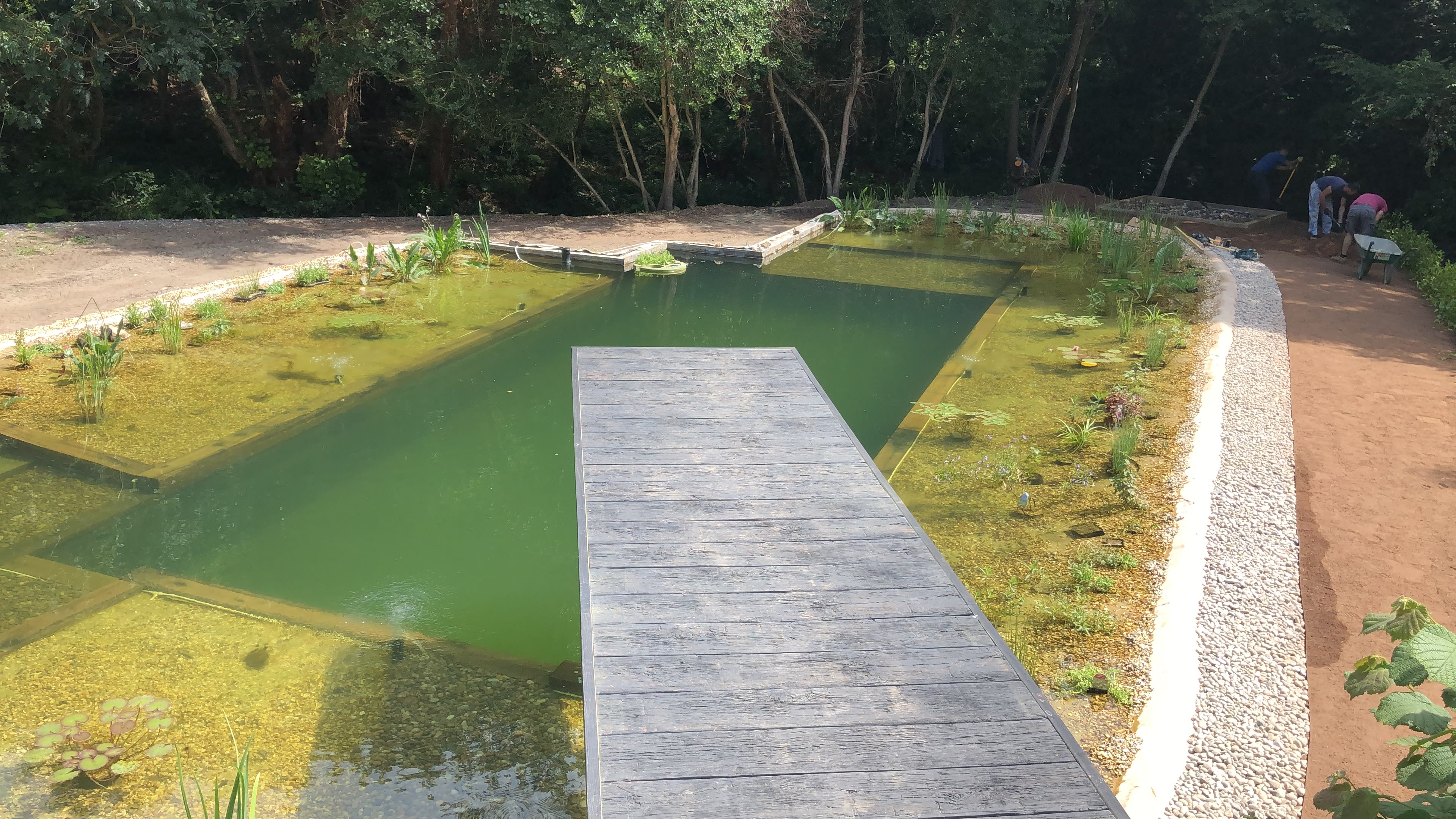
The last structural piece was the wooden diving jetty. It extends from the bank out over the deep zone on two posts, with a heavy timber deck. A wide set of steps was also built into the bank for slower, safer entry — particularly useful in winter.
Local timber, stainless fixings, untreated so it weathers naturally to grey over the years.
07
The first swim
The first swim happened around six months after excavation began. The water was cold, clear and very deep — 3 metres at the centre.
08
The pond today
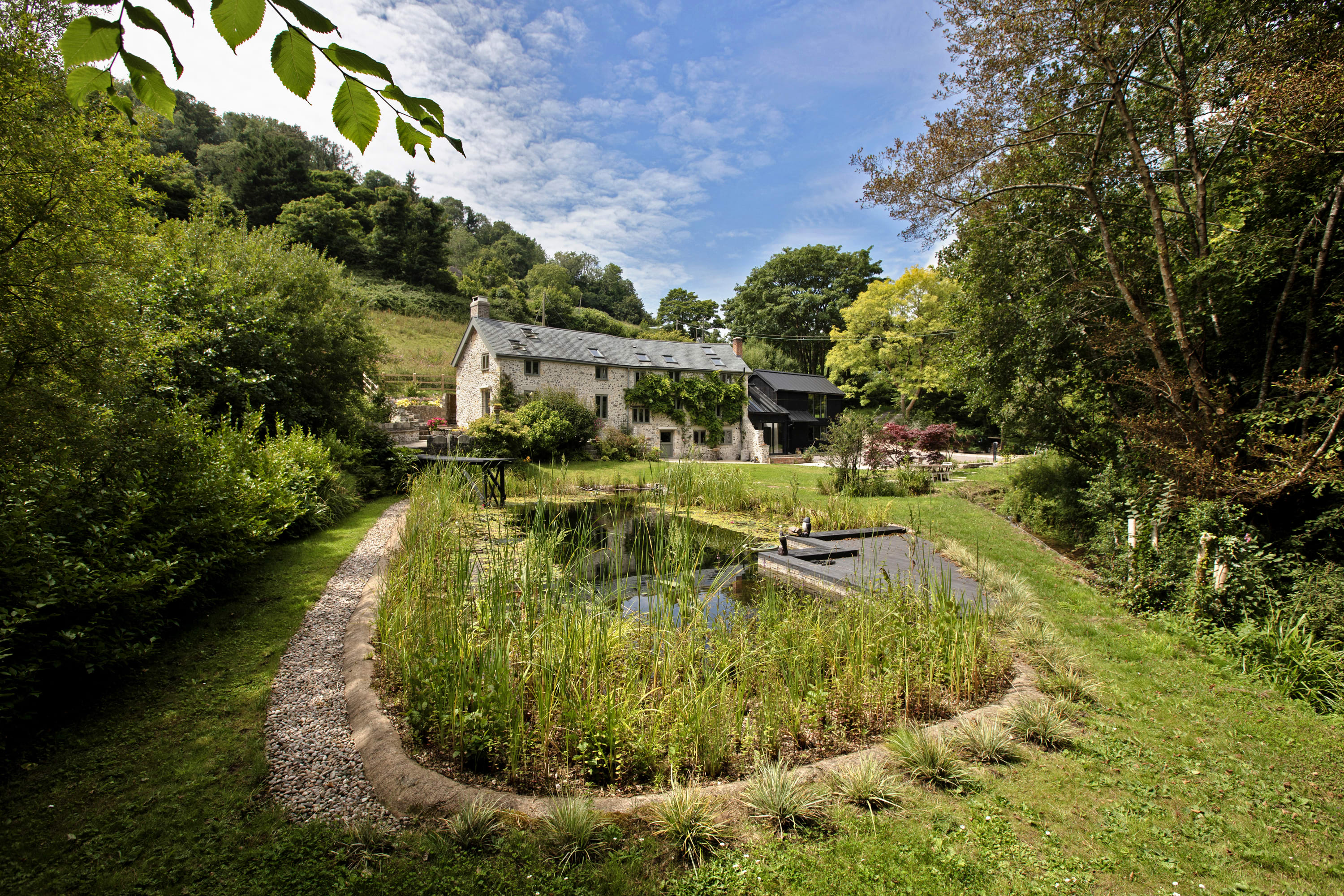
A few seasons on, the ecosystem has stabilised. Great crested newts arrived in the first season and have bred every spring. Dragonflies and damselflies established the following summer. The waterlilies have spread, the irises have grown taller, and the regeneration zone is densely vegetated.
The pond is open year-round. In summer it warms enough for long swims; in winter it sits between 4 and 10°C and is used regularly by guests for cold-water swimming.
“A logistical nightmare to build, but all worth it.”
On the finished pond
Want to swim in it?
The pond is open to every guest who stays at Hole Mill, year-round. Read up on cold-water and winter swimming, or check live availability.